History’s Gem of the Month: Excerpts from The Grand Marais Herald

November 2013

A few years ago, former Grand Marais resident (but current property owner) James Carter borrowed a copy of an old Grand Marais newspaper that is in the Gitche Gumee Museum’s archive. I was curious why he even knew about it. I loaned him the paper, along with a few other items. When he returned the envelope, he included the letter below. Mr. Carter has a passion for local history and published a Grand Marais history book, Voyager’s Harbor, in 1967. The Grand Marais Herald was founded by A. De Lacy Wood in 1894.

Karen – Tuesday, Jan 26, 2010
Really enjoyed our visit. Seems good to talk “shop” with someone who understands book printing and publishing.

I’m sending you your papers without further delay. Many thanks for the loan and your patience in their return.

The Grand Marais Herald was given to me by Ray Barney. When I was in high school I traded it to Axel for an agate ring, which I still have. I didn’t place as much value on historic items then! As far as I know, there are about half a dozen copies of the Herald existing. I have all but the one of yours. Mine have been micro-filmed by several libraries, including the Library of Michigan. The Herald was moved to Munising in 1910 and later the editor, Arthur D. Wood, bought into the Munising News and the Herald files were kept there. Unfortunately th Munising News office burned in the late 1930s, and the Herald’s files were lost or otherwise discarded in the aftermath of the fire. What a loss!

All the best,
Your friend,
Jim Carter

Volume Xi, No 30, March 4, 1905 — Grand Marais Herald

Red Hot News
Page 5

  • Tomorrow is Quinquagesima Sunday. [Name used for the Sunday before Ash Wednesday].
  • A large number of young folks enjoyed a sleigh ride party on Saturday evening.
  • Hundreds have been benefited and more are being pleased daily at Saulson’s fire sale.
  • Fred Masse has accepted the position of deliveryman for the People’s Meat Market.
  • March came in – in lamblike fashion – which is a bad omen as to the manner in which it will take its exit.
  • Thomas Regan moved his cigar factory to his new quarters in the Beaulieu building, Brazel Street. [This is the building that now houses the Gitche Gumee Museum.]
  • Another wedding is booked for next Wednesday evening. Who can guess the principals?
  • The local fishermen are ready for the season to open, and are hoping for an early ice breakup. Last year the season did not formally open until late.
  • John Monte, who has been stationed at Seney for the past two years in charge of the Manistique Railroad Company’s interlocking plant has resigned and returned to this city this week. Verily the poor railroad men have been up against a hard proposition for some time and will doubtless welcome a change of conditions with as much pleasure as will the general public.
  • If you cannot eat, sleep, or work; feel mean, cross, and ugly – take Hollistor’s Rocky Mountain Tea this month. If taken this month, keeps you well all summer. A tonic for the sick. There is no remedy equal to it. It will bring rich, red blood and firm, flesh and muscle. 35 cents; tea or tablets. H.A. Schall.
  • Conductor Lou Williams is able to be out and around, with the aid of a cane, and is rapidly recovering from his confinement caused by blood poisoning in the knee, brought on by receiving a cut from an ax. He will be able to resume his duties on the passenger run of the Manistique Railroad within a short time.
  • NOTICE: Mr. Doorman, S. brown formerly of Grand Marais, who is at present visiting in the city at the home of his parents, wishes to inform the public gossipers of this community, that if they do not desist at once, from talking about his personal affairs and character, that he will take legal steps to make them prove their assertions in a court of law. It is hoped that a word to the wise will be sufficient and that the slanderous assertions will cease.
  • We call to the attention of our many readers to the new advertisement of Mrs. M.C. Levdque, which appears in this issue of The Herald. Mrs. Laveque recently opened up dressmaking parlors in the Logan Building, Carlson Street. Being an expert in her line and a specialist in the art of making ladies tailor made suits, she now has a lucrative trade. Her work gives eminent satisfaction and her prices on ladies garments are very reasonable. In the near future it is Mrs. Leveque’s intention to add to her dressmaking establishment, a hairdressing and messaging department for the ladies. These will no doubt prove to be a great convenience to the ladies of Grand Marais and will not only be generously patronized, but much appreciated as well. Mrs. Leveque with the aid of two assistants, is very busy at this time until the spring rush in dressmaking is over.
  • Of course you kick, more or less, about the Russian winter that we are enjoying. You get up in the morning with an effort. You shiver as you put on your clothes, and you hope that you will never see any more snow or ice. Not in years has there been such a consistent and steady winter…. But it is good for the country. It is good for the health of the people. It is especially good for the farmers. Next to fertilizer, a blanket of snow is the best thing for land. It protects the growing wheat and gives it a good start for spring. There are weather prophets who assert that a long cold winter means fine weather for the rest of the year. They claim that the history of this country will back up their assertions. They insist that the sequel to the hard winter will be found in bounteous crops next year. Bounteous crops of wheat, corn, and oats means good times. The farmers friend – a cold snowy winter is here, and bids fair to stay for a while. So you see that the weather that annoys and makes one grunt and complain is a national blessing.
  • This is time to plan for spring improvement of private and public property. If painting is to be done, consult the surroundings and decide on a color in harmony with them. There bids fair to be an unusual rivalry in gardening this coming season. The old-fashioned formal flower garden is very much in vogue again, and surely nothing could give more pleasure and satisfaction. It will soon be time to plant it. Those who began several years ago are fortunate.
  • NOTICE: Members of the city fire department, as well as citizens who in emergency may act in the firemens place, are requested in time of fire, to always try a water hydrant before removing the hose from the hose cart. If after trying the hydrant, it is found to be in working order, it is then proper to remove the hose from the cart and make the coupling. This request is made to avoid the loss of time in picking up hose after it has been laid in the event that some of the hydrants might not be in working order when most needed. Thus the hose is not laid until after ascertaining whether or not a hydrant is working. … This is requested of the entire community and it is hoped for the good of all concerned that in future it will be complied with. William Rivers, Superintendent of Water Works, Feb 25, 1905.
  • With butter and eggs selling at 35 and 40 cents, the possibilities of a good dairy farm in this locality are again forcibly brought to view.
  • Services at the M.E. Church, Sunday:
  • Sunday-Class meeting 9:30 a.m.
    Preaching service 10:30 a.m.
    Sunday School 11:15 a.m.
    Praying Band 4:00 p.m.
    Epworth League 6:30 p.m.
    Preaching service 7:30 p.m.
    Prayer Meeting Thursday 7:30 p.m.

CURRENT GRAND MARAIS SCENES: November 2013

First of all, I would like to thank everyone for the positive comments I get regarding the pictures I post on the blog at www.agatelady.blogspot.com. This year I have missed more days than last, but I still average posting an update at least six days a week. So for this web page update, I looked through all the photos and picked out my favorite that I’ve taken over the past couple of months.

First, here are a few pictures taken along the cliffs in the Pictured Rocks National Lakeshore. The third one is the base of Chapel Rock. I think it looks like one of the stormtroopers from the Stars Wars movies.

Next is a photo of Chapel Falls.


Of course, I have to include a couple fall color pictures. The first one was taken from the overlook at Sable Lake looking straight across the lake. The second was taken on the path between the Log Slide and Au Sable Lighthouse.

Plus a couple of photos from the beaches of Grand Marais…..

And two pictures from the dunes, the second of which shows a different view of Au Sable Lighthouse….

But we may as well end this grouping with some sunset photos….


CUSTOMER AGATE FINDS: August 2013

Right after the icebergs melted, we had terrific agate hunting in the Grand Marais area. For the first time in several winters, we had floating ice on Lake Superior. As the shore ice forms, rocks become embedded in the ice. When the wind shifts, sometimes this shore ice breaks off and floats around Lake Superior – carrying a hidden stash of rocks.

In the spring, the icebergs get blown by northwest winds and beach for the last time between Grand Marais and Whitefish Point. At first there was a ton of rock on our local beaches. Although there is still some rock now (late in the summer), there have been three Lake Superior storms that have played havoc with the beaches. One late spring storm and two massive summer storms have under-towed many of the rocks back out into the lake bed, and covered up others with sand. From week to week, if not day to day, the availability of rock on any particular beach changes drastically. So agate hunters this summer must be patient.

Whenever customers come into the museum with their agates that I photograph for this web page, I usually write down their names and save those cards until I execute a web page update. This time I am not sure I managed these pieces of paper well. I’m missing at least one – and for that I apologize. Please send me an email to Karen@AgateLady.com to correct my gaps or any errors below.

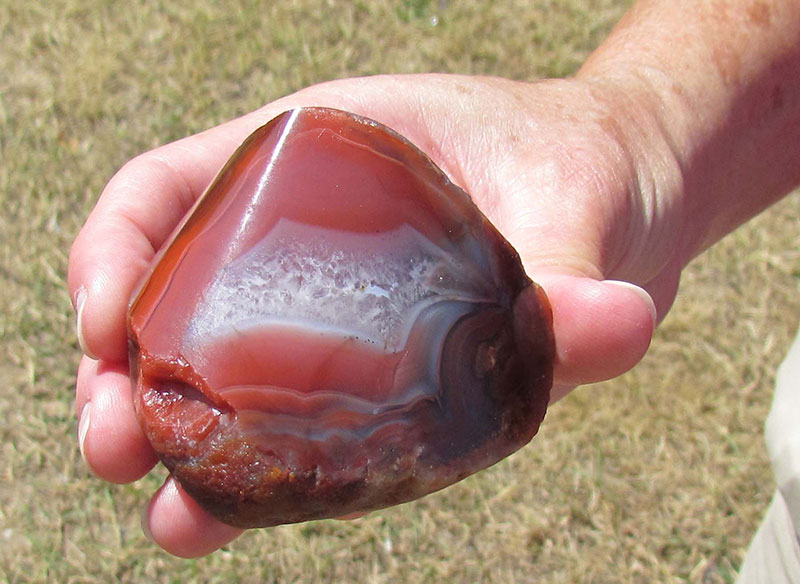
At the end of May, this woman came into the museum with a rock – asking if it is an agate. She also asked me to cut and face polish the specimen. When she found it on the beach east of Grand Marais last fall, it appeared to have recently eroded out of the dune. The cryptocrystalline husk on the rock had not yet eroded away, so although it was translucent, you could not see much banding. However, there was a fracture on one end that clearly exposed banding. What a ¾ pound agate it is – especially since it is the first one she ever found. I had the name on the paper bag used to transport the agate home – but I didn’t record it and I threw the bag away. Note to agate finder: I hope your surgery went well and that you were able to bring the agate into the O.R. with you. Let me know and also email me your name and home town so I can include it with this update.

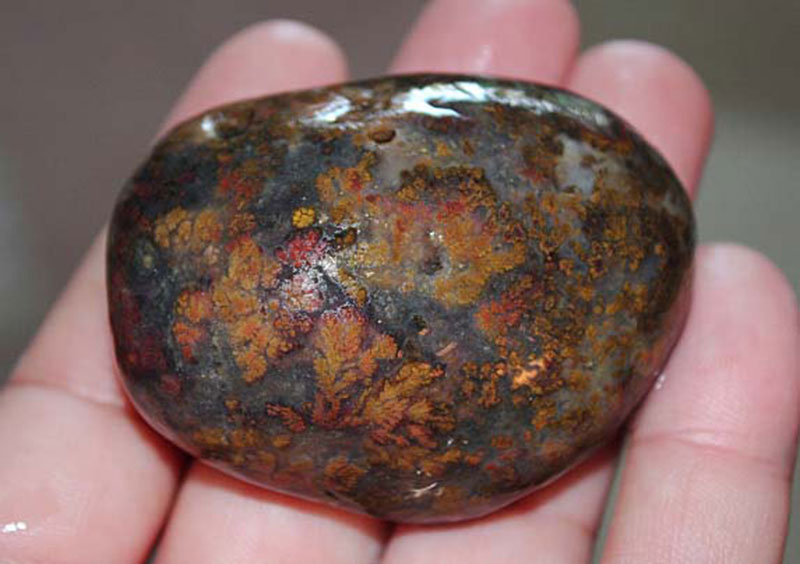
Tim and Shawn Burt came into the museum at the end of June with this unusual specimen. It had some agate as well as macro quartz along with ocean-jasper-like orbs.

Local resident, Ryan, used to help me out at the museum when he was a young kid. He stopped by the museum to show me his jar of agates. Good job, Ryan!

Oops – looks like I misplaced a second card with info about this agate and agate hunter. She brought it by the museum on July 17th. Nice agate! Please email me and let me know your name and home town!

Nolan, Emma, and their mother, Margaret from Lapeer, MI showed off their agates found in Grand Marais the third week of July.

Ken from Milan, MI showed off the agates he found in the Keweenaw Peninsula. These paint-stone agates are a bit different than those found on the Grand Marais beaches.

Tony emailed the photo below of a plume agate he found on Whitefish Point in early August.

MINERAL OF THE MONTH: August 2013 – Unakite

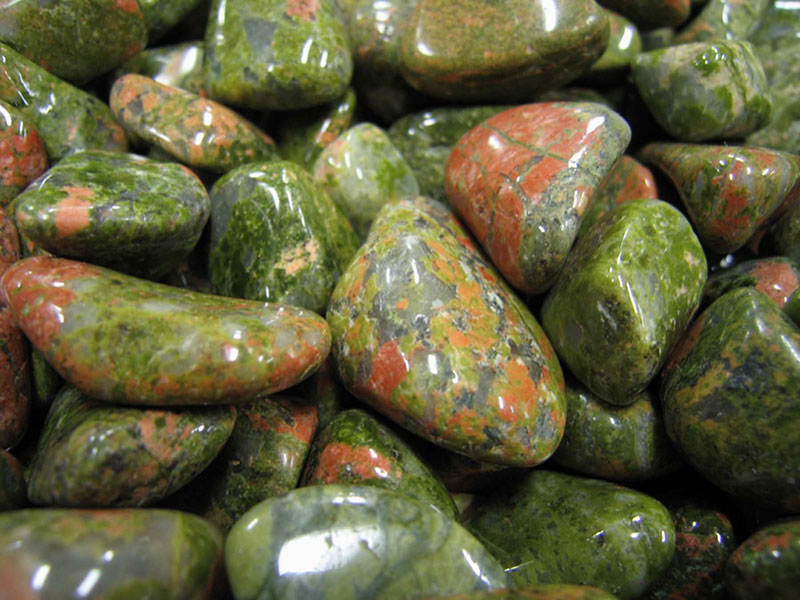
This rock was first discovered in the United States in the Unakas mountains of North Carolina. Unakite is an altered form of granite composed of pink orthoclase feldspar, green epidote, and quartz. The green epidote can vary in its shade of green, as can the pink feldspar. Usually the colors combine to create a mottled appearance. In some cases, when the colors are especially pronounced, unakite is considered a semiprecious stone and can take a good polish. Since it does polish well, unakite is often used to make jewelry and other trinkets.


Unakite can be found as pebbles and cobbles from glacial drift in the beach rock on the shores of Lake Superior, and sometimes Lake Michigan. It also has been found in Virginia, South Africa, Sierra Leone, Brazil, Zimbabwe, Switzerland, and China.

Unakite derives its name from the Greek epidosis, meaning “growing together”. This stone can be used to draw off negative energy, therefore lifting your spirits. It is also used to help you to see and appreciate the beauty of life and to help you overcome challenges and negative experiences – especially those that drain your energy and try to hold you back.

CITES:

History’s Gem of the Month: All That Glitters….

 August 2013

‘All That Glitters….’
By Harry C. Sahs
August 31, 1958 The Detroit News Pictorial Magazine

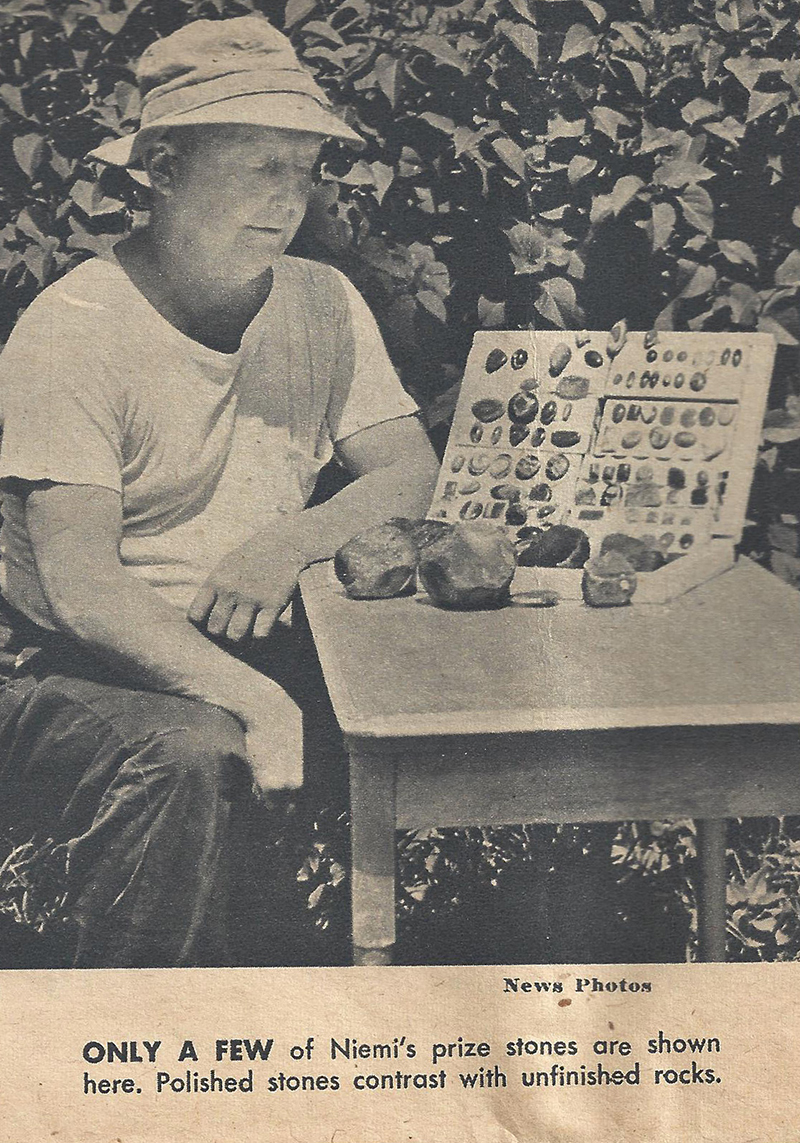
If agates were gold nuggets, Axel A. Niemi would be the richest man in Michigan. Of all the “rock hounds” who have combed the storm-tossed beaches of Lake Superior for agates, probably none has found as many of the beautiful rocks as Niemi.

Known as the “agate king” of Grand Marais, Niemi has been an avid collector since he came home from two and a half years of Army service during World War II. Although he had spent all his life where agates are relatively common. Niemi didn’t “get the fever” until he met an Australian in the South Pacific who carried a clear orange chrysolite faceted agate. (NOTE: Axel hand wrote a note on the article stating that this is a “Big Lie!. In fact, Axel was a rockhound his whole life.)

Today, self-taught in the art of cutting, grinding, sanding, and polishing the semi-precious stones – and with a study course in gemology under his belt – Niemi’s “agate king” title goes undisputed.

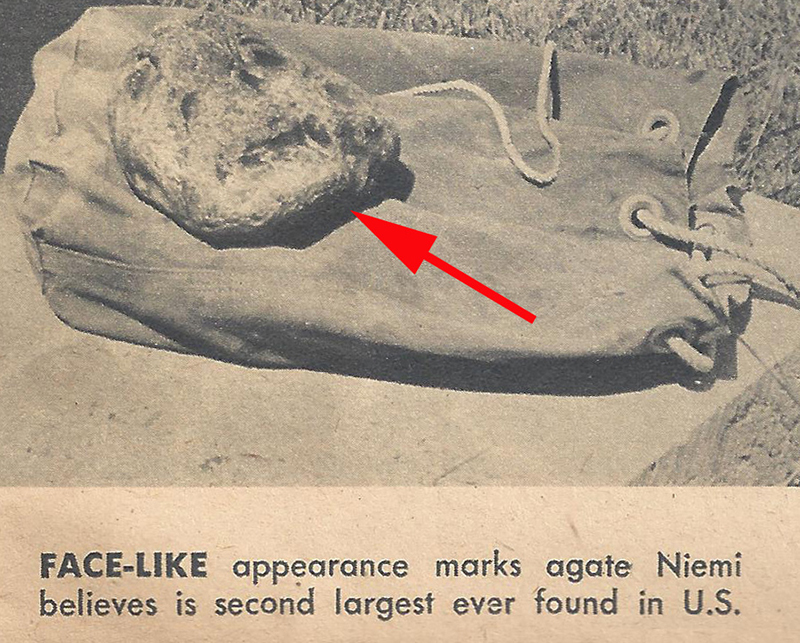
The 40-year-old collector believes he has found the second largest agate ever discovered in the United States. It is an almond-shaped translucent stone weighing five and a half pounds and valued at $200. Only the 10 ½ pound stone now in the Smithsonian Institution in Washington D.C., surpasses Niemi’s find.

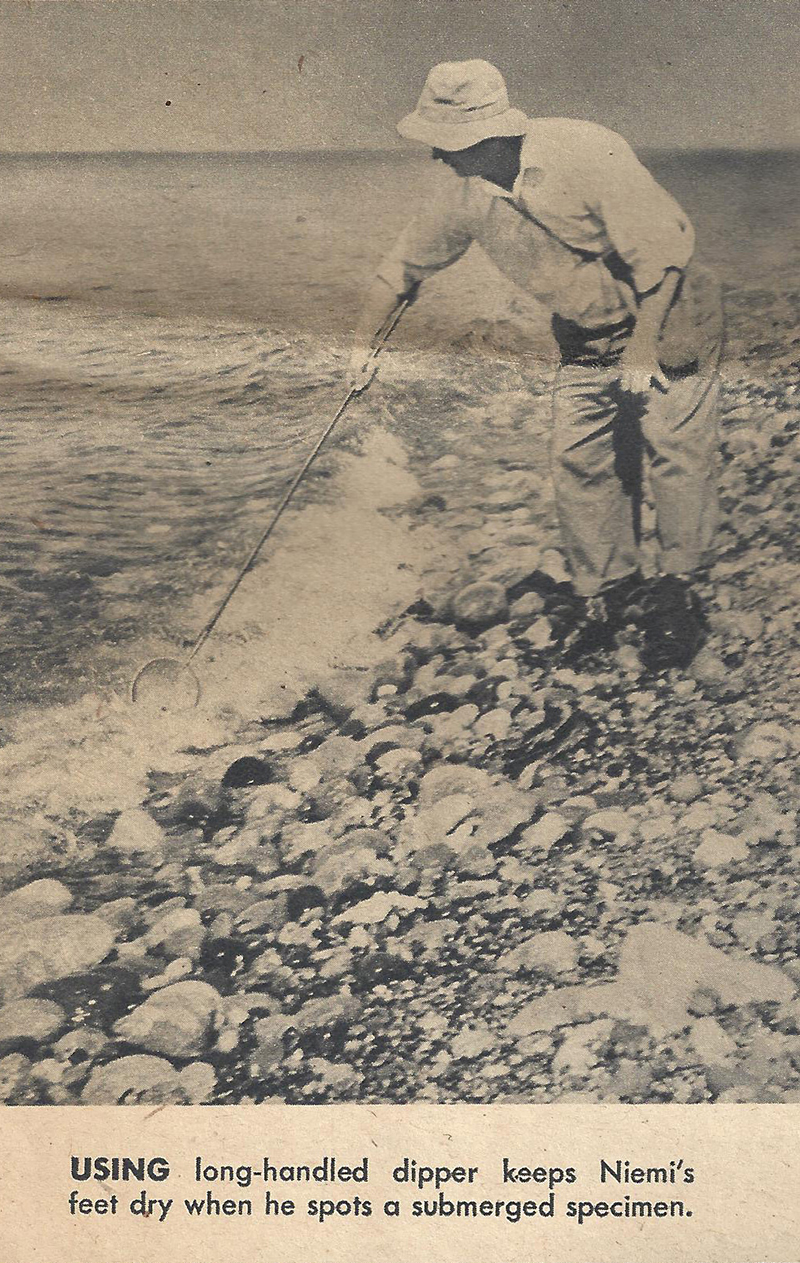
Best time for agate hunting, says Niemi, is immediately after a violent storm when deep waves churn the lake bottom and toss up new rocks on the beach. Even then, however, it is no easy job to find the elusive agates. It takes time – and patience.

CURRENT GRAND MARAIS SCENES: August 2013

I have not had a lot of time for hiking adventures this summer, but I have had a few great outings.

After posting the last web page update in March, I did a series of snowshoes on the beach in front of Woodland Park. Here are some of the photos taken from March through April.

Here are some more late winter, early spring photos taken on the beach and in the Grand Sable Dunes.

One of my favorite things to do in the winter is to go to frozen waterfalls. Here are some shots that were taken at the Eben Ice Caves, as well as one of the creeks in Grand Marais.

During the winter, the whitetail deer hang out in my yard and dig for apples. Since the apple crop was not well last fall – the deer were very hungry. So in April, I did feed them corn in my yard.

Here are a couple of beach scenes showing driftwood and ice break up, followed by some other spring scenes.

CUSTOMER AGATE FINDS: March 2013

Since the museum has not been open, I only have one set of actual customer agate photos. Chris Cooper showed me the raw agate last summer that he physically extracted from basaltic rock in the Keweenaw Peninsula. Since this agate nodule had never been subjected to erosional forces (e.g. waves, ice, etc.). Notice how there is a full husk on this agate and that absolutely none of the chalcedony is showing on the outside. Keep in mind that this is rare and almost never happens with agates found on the beach, which have been subjected to erosional forces. Chris then tumbled the agate. Below are the before and after pictures.

For this month’s update, I’ll supplement this posting with some agate photos that I have taken, all of which are included in the Online Rockhounding Adventures. The next two photos show exposed banding on Lake Superior agates. The first one is a raw agate and the second is a polished agate.

Here are some more photos showing raw agates on the beach.

The two photos below are close up images of a Lake Superior paintstone agate.


MINERAL OF THE MONTH: March 2013 – Jacobsville Sandstone


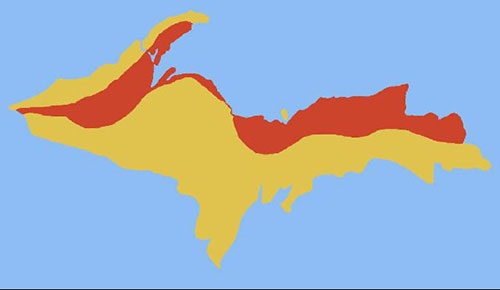
Jacobsville Sandstone is a red sandstone that has light-colored streaks and spots caused by chemical leaching across the bedding planes. This beautiful rock is found along the Lake Superior shoreline in northern Upper Michigan and Ontario. Scientists also think that Jacobsville lies under much of Lake Superior. There are also other sandstones in Wisconsin and Minnesota that may or may not be the same formation (Freda sandstone, Bayfield Group sandstone). Jacobsville Sandstone is composed of: 27.4% nonundulatory quartz, 27.0% undulatory quartz, 23.0% potassium feldspar, and 12.3% silicic volcanic clasts.

A hundred years ago this rock was mined and used as a building material. It was highly desired for its durability and aesthetics. Over 30 different quarries in the Upper Peninsula extracted Jacobsville sandstone between 1870 and 1915.

Below is a table showing the sandstone sales from 1899 to 1913.

Year Total Value
1899 $178,038
1900 $132,650
1901 $174,428
1902 $188,073
1903 $121,350
1904 $74,868
1905 $123,123
1906 $65,395
1907 $53,003
1908 $39,103
1909 $36,084
1910 $31,233
1911 $12,985
1912 $16,438
1913 $19,224

There is some confusion about this rock since it has had several names including redstone, brownstone, Lake Superior Sandstone, and Eastern Sandstone. In 1907, however, the sedimentary formation was given its current classification and the name Jacobsville, in honor of the town in which some of the quarries were located. There is also disagreement about the age of the sandstone. Most believe that it formed around a billion years ago, but others feel that it is half that age. Since the sandstone is entirely devoid of fossils, the older age classification is more likely.

Today, the best place to see this rock is near Au Sable Point, located around eight miles west of Grand Marais.

CITES:

History’s Gem of the Month: The Shark: Post 3

March 2013

This is the second History’s Gem of the Month posting featuring a thesis written in 1995 by Jim Williams for a class at Western Michigan University. The curator of the Michigan Maritime Museum gave me a copy of the thesis when the museum also gifted me with the Shark. The thesis is several pages long, so I’ll include it over three postings.

Shark: A Lake Superior Fish Tug

By Jim Williams

Ingredients for a New Boat (continued)

Niemies built Shark’s deckhouse out of ship lapped white pine boards. Alfred says that they probably built the deckhouse a foot higher than it should have been. He reasons that they laid the inside deck a foot too high in the hull, causing them to have to raise the deckhouse roof for head clearance. The change in deckhouse height gives an exaggerated angle to the house roof as it slopes down to the stem post; Shark shows a bit greater angle here than most fish tugs, giving her an unique profile. Alfred and Arvi sheathed the deckhouse roof with white pine boards, then covered it with canvas bedded in marine glue.

The Nimies used creosote on the hull as a preservative. They painted the black goo on every inch of the bilges. Then they painted it on the outside of the hull, from keel to a foot or so above the waterline. Both Alfred and Axel remember the unpleasantness of working with hot creosote. Fumes from the creosote caused the skin on Alfred’s face to peel off: twice. The brothers remember how, by the end of the day, they went home choking and gagging, with the skin sloughing off their hands. Otto repeated the creosote treatment twice a year as long as he fished the boat.

The Niemies overhauled the Fordson engine from the Elk and installed it in the Shark. They mounted an auxiliary shaft and Model T engine for emergency power. The Pentwater net lifter from the Elk also found a new home in Shark’s bow. Otto used his metalworking skills to build a galvanized metal box to protect the Fordson’s flywheel and magnetos from water damage.

The Fordson engine turned a Michigan wheel company propeller with reversible “buckets.” The helmsman controlled the boat’s speed by the infinitely variable pitch of the propeller. Axel remembers that it took only minute adjustments of prop pitch to change speed. The combination of the Fordson and the Michigan propeller drove the boat to a top speed of about eight miles an hour. At this speed, Otto’s favorite fishing grounds lay just an hour’s run to the northwest of Grand Marais.

Otto and his sons launched Shark in the spring of 1941. Axel chuckled when asked about how the boat got named. “Well,” he said, “dad kind of liked naming his boats after wildlife, and I guess he liked “Shark” because it was easy for him to spell.”

Fishing the Big Lake

All the Niemi boys worked on the boat from time to time, but Axel stayed full-time with his father. Together they fished the Shark until 1953. They put the boat in the water in May, most years, and hauled her out in September. Shark performed reliably, year in and year out. Alfred says that the Shark didn’t have the unpleasant characteristics of her predecessor; he remembers her as “really a good sea boat.”
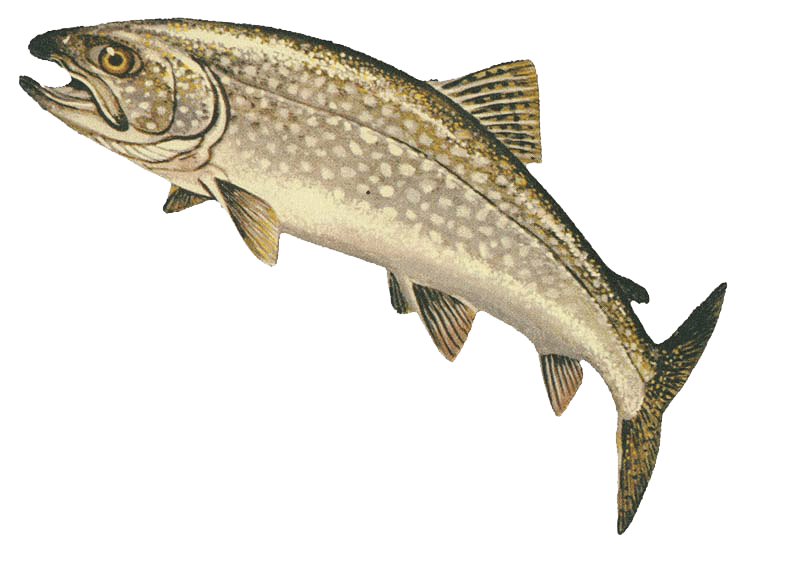
Otto and Axel fished primarily for trout, “priding themselves on producing number one Lake Trout of the finest quality.” Axel also takes pride in saying that “dad didn’t hog the lake.” By that he means that, unlike many other fishermen who drove themselves to take increasingly large catches, the Nimies took only enough fish to make a comfortable living. They understood the fish as a finite resource and fished accordingly.

The Nimies began fishing in the spring using set hoods on long lines. They switched to using gill nets by summer. They usually set four to five boxes of nets per day. Each box contained two nets measuring six feet wide and six hundred feet long, making a 1,200 foot set. Fishermen set nets by streaming them out through the large hatch at the boat’s stern while the boat moved slowly forward. When they hauled them in, they took a wrap of net around the drum of the lifter, and while one person “tailed” the net at the lifter drum, the other took the fish off the net. Most two-men boats had an engine and steering control station up forward for use when pulling nets. They left the nets in the lake for three to four days at a time. Each net got hauled and taken onshore to dry every three to four days.

Lake Superior’s trout fishery declined by the early 1950s. The fishing business became so unprofitable that Otto Niemi hauled the Shark up on marine railway for the last time in the fall of 1953. Many people blame predation by the sea lamprey for depletion of trout stocks in the lakes. Axel Niemi acknowledges the lamprey’s effects, but places as much, or more, blame on overfishing.

 The decline of the Fishery

Native Americans harvested fish from Lake Superior’s waters for thousands of years. Fishing primarily the inshore waters supplied them with abundant food. The Indians took only what they needed for survival. When the French began to explore Michigan, the total Indian population of the state numbered 15,000 or less. Most of the Indians probably lived in the Lower Peninsula, since the Chippewa did not begin to move into the Upper Peninsula until the seventeenth century. Certainly, the Indian population put no pressure on Lake Superior fish stocks.

White explorers saw vast wealth in the north country’s resources. As early as 134, efforts began to establish a fishing industry on Lake Superior. The American Fur Company set up fishing stations on the lake in 1835, 1836, and 1837. The fishing industry caught hold, creating a need for more and bigger boats. Opening of the first lock system at Sault Ste. Marie made it possible to ship ever larger catches to down lake markets. Lake Superior fishermen soon shipped many tons of fish annual out of the north country. Pressure on native fish stocks increased exponentially as fishing became a primary industry on the big lake.

Seasonal catches for two sections of the lake serve as examples of the extent of the fishery. Fishermen on the section of Lake Superior between Ontonagon and L’Anse brought in “nearly 405,000 pounds of fresh fish and about 4,200 barrels of salt fish” in 1879. Thirty-three men fishing out of Marquette brought in a total catch of 450,000 pounds that same year. Trout, whitefish, siskowet, herring, and a few incidental species made up the catch.

Dramatic changes occurred in the Lake Superior fishery by the 1920s. For one thing, from a commercial point of view the whitefish had become virtually extinct along the American shore of Lake Superior. The trout catch plummeted from a peak of almost 5 million pounds in 1903, to 2.8 million in 1922. The trout catch for 1940 amounted to about 2.6 million pounds, a slight increase from immediately preceding years.

Lake Superior fish stocks continued to decline through the 1940s. A simplistic explanation blames the sea lamprey. A close look reveals that the sea lamprey did not enter Lake Superior until sometime in the 1940s. Scientists collected the first confirmed adult lamprey in Lake Superior in 1946, an immature adult. Scientists correlate scarring on lake trout with lamprey abundance. Commercial fisherman reported that less than one percent of the lake trout were scarred in 946 and five percent in 1951. The trend of increased scarring continued, peaking in 1959 and 1960 when more than 90 percent of trout taken bore lamprey scars. Lamprey took a terrible toll on the fishery, but so did other factors.

A U.S. Fish and wildlife Service study outlines a broader explanation for the fisheries’ decline; “undesirable changes have been attributed to the overharvest of desirable species, the invasion and introduction of undesirable exotic species, lowered water quality, and the destruction of portions of the physical habitat, including spawning grounds, vital to the maintenance of the recourse base.” Overfishing stands out as a major destroyer of fish stocks, from Axel Niemi’s point of view.

Not more than a dozen boats fished commercially out of Grand Marais at any one time until the 1940s, according to Axel Niemi. Popularity of trolling for trout brought an explosion of fishing boats to the lake by the end of World War II. According to Axel, “nine out of ten fish caught with trolling spoons are female.” He remembers seeing the trollers cleaning fish on the Grand Marais docks, throwing away barrels of fish innards containing millions of trout eggs. By 1950, fifteen to twenty trolling boats fished regularly out of Grand Marais.

Nylon nets also contributed to overfishing, says Axel. The ten to fifteen foot width of a nylon net takes more fish than the traditional six foot wide cotton cord net. Nylon nets will not rot, so fishermen leave them in the water all the time, never relieving the pressure on the fish stocks.

Whatever the causes, by 1953, Otto and Axel Niemi pulled the Shark out of the water for the last time. Otto retired and Axel pursued his passion for making agate jewelry, opening a rock shop and museum in Grand Marais.

Retirement

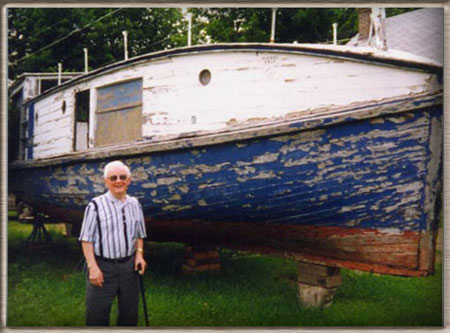
The story of the Shark’s later years remains incomplete. She sat on her marine railway outside Niemis net shack for three years. In 1956, two men from Cheboygan, Michigan, who had the idea of fishing for sturgeon in Lake Huron, approached Otto about buying the Shark. He told the “you can have it for a song.” Shark went off to Cheboygan on a flatbed semi-tractor after Axel helped load her. According to Axel, the men tried for two years, but never caught one sturgeon.

Shark reportedly saw some use as a pleasure boat after her time in Cheboygan. She then spent several years fishing out of St. Joseph, Michigan. Along the way, one of her owners took out the Fordson engine, re-powering her with a Perkins diesel with 60-70 horsepower, coupled to a Chris Craft transmission. Robert Trowbridge, of South Haven, acquired the boat, by now called Tug Her, in order to get the engine. He, of course, ultimately gave her to the Michigan Maritime Museum.

CITES:

Museum post cards

CURRENT GRAND MARAIS SCENES: March 2013

Since the regular museum hours ended in September, I have spent all my free time when not at shows working on the Online Rockhounding Adventures. Thus, I have not executed a web page update. So for this update, I’ll include a few extra photos.

Fall colors were spectacular last autumn. Some of the maple trees were redder than they have been in years.

Even during the part of the year that the sun sets south of Au Sable Point, we still have nice beach sunsets.


Sable Falls with more trees than usual….


Boulders on the beach near Au Sable Point….


Grand Sable Dunes…


The Pickle Barrel during early winter…


Another winter beach sunset….


Winter snowshoe scenes….