CURRENT GRAND MARAIS SCENES: March 2017

NOTE: More Grand Marais scenes are posted often on my blog at www.agatelady.blogspot.com and on my main personal Facebook page athttps://www.facebook.com/karen.brzys.

For this webpage update, I have selected some of my favorite pictures that I took in the Grand Marais area between September and February.

First, here are a few fall photos.

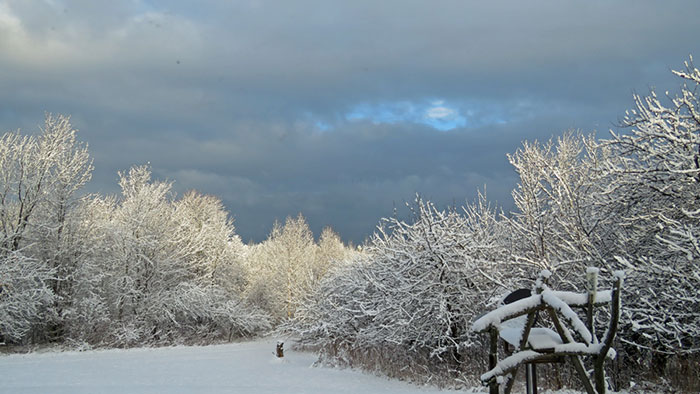
One of the first snow storms we had coated everything with white.

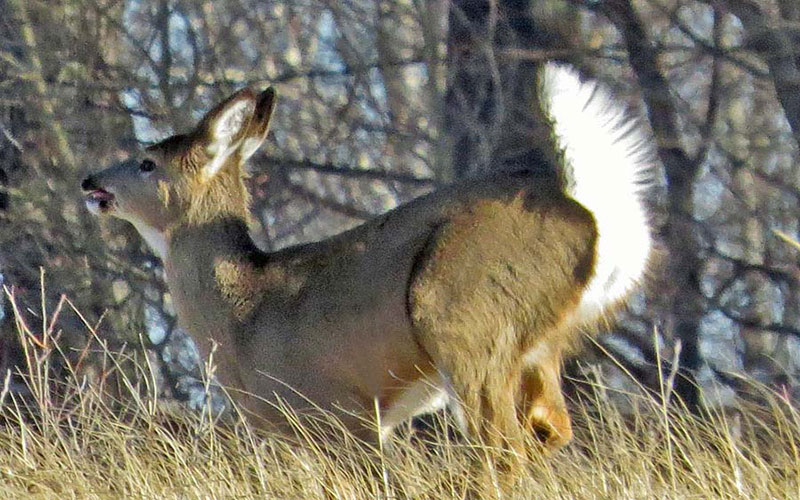
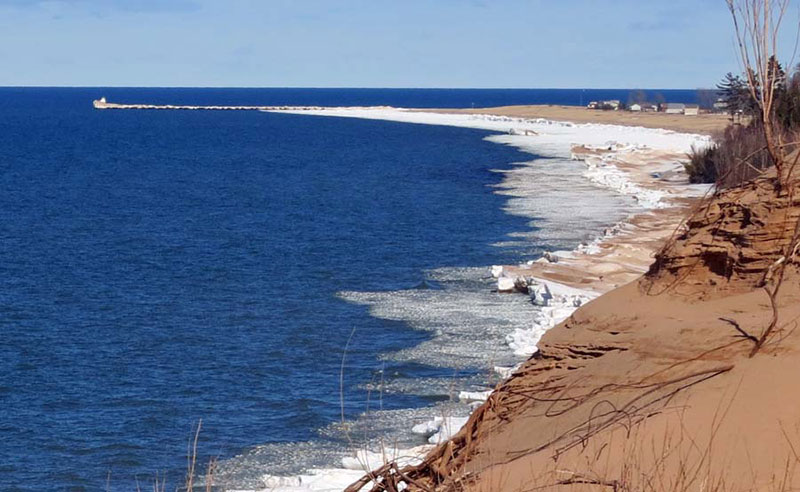
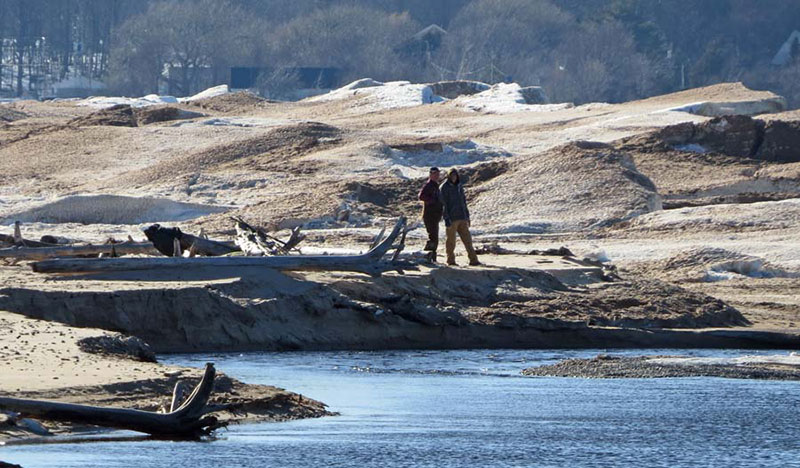
Finally, here are some winter photos, including one photo from the UP 200 Dog Sled Race. The mushers stop, rest, and turn around in Grand Marais.

History’s Gem of the Month: Logging Era Photos

March 2017

When I researched the history book I wrote last year, Superior Land and the Story of Grand Marais, Michigan, one of my tasks was to locate relevant photos. Thankfully, the museum archives contained many dozens of film negatives and pictures. I also acquired some photos from the State Historical Library in Lansing. Finally, I was able to find a few photos from other sources.

Although logging began in the Grand Marais area in the 1880s, logging activity didn’t intensify until the forests located down state were depleted and when the railroad was built to connect Grand Marais to Seney. Today there are only around 350 full-year residents in Grand Marais. During the peak of the logging era, there were officially more than 2,000 residents. However, the actual population was probably much higher since the census did not always count transients who worked in the logging camps, nor did the census always count Native Americans.

Below are some photos from the logging era.

CUSTOMER AGATE FINDS: June 2016

Since the museum just opened the other day I have had a few customers bring agates in, but none that were worthy of posting photos for this update. So instead I took photos of some of the agates that I have in the museum’s gift shop. All the photos were taken with my USB microscope camera.

Here are a few photos of Mexican crazy lace agates…..

Here are some photos of Lake Superior agates.


MINERAL OF THE MONTH: June 2016 – Lake Superior Copper Replacement Agates

This web page update features the copper replacement agate. They can only be found in the Keweenaw Peninsula, located in Michigan’s Upper Peninsula. They can be found in the mine dumps near abandoned copper mines from the Kearsarge Lode. Most of these agates are small – less than an inch in diameter. They are extremely rare and difficult to find, usually requiring labor intensive work to free them from the basalt matrix rock. These agates are well sought after because of their rarity, their interesting patterns, and the vast array of other mineral inclusions. In addition to copper these agates often have other mineral inclusions including silver, calcite, malachite, tenorite, epidote, and pumpellyite, In most cases these small agates are fully husked, requiring them to be cut to expose their inner beauty.

The copper replacement agate shown below includes malachite, pumpellyite, and epidote inclusions.

The agate below has white chalcedony bands on the left and clear calcite on the right. Copper is in the outer shell, surrounding the specimen. The green is epidote and the red is a copper oxide.

The two photos below show copper replacement agate nodules in basalt matrix rock. In addition to copper there is also prehnite, epidote, and pumpellyite (dark green inclusions). These photos were taken by Dave Schuder.

The specimen shown below has basaltic matrix on the left and copper replacement on the right. The copper bands alternate with the chalcedony bands. This photo is from my agate book, Agates Inside Out.

CITATION: The first three photos shown above (used with permission) are from the Wayne W. Sukow collection http://www.sukowssuperiorminerals.com.

CURRENT GRAND MARAIS SCENES: June 2016

NOTE: More Grand Marais scenes are posted often on my blog at www.agatelady.blogspot.com and on my main personal Facebook page at https://www.facebook.com/karen.brzys  . I also post agate photos, shared mostly on various Facebook rockhounding sites, to the museum’s Facebook page at https://www.facebook.com/pages/Gitche-Gumee-Agate-and-History-Museum.

For this webpage update, I have selected some of my favorite pictures that I took in the Grand Marais area between December and June.

First I will include several winter photos. The first picture was taken near First Creek, located on the west side of Grand Marais. The weather this day was well below zero with 40 mph winds!


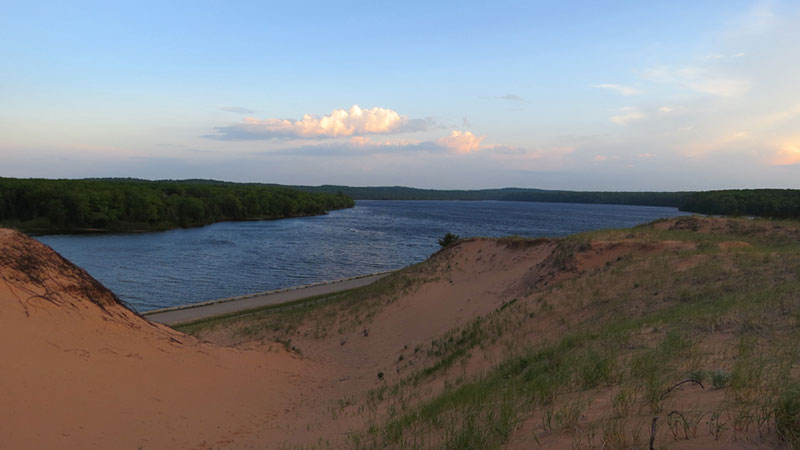
The next photo was taken from the boat ramp on Sable Lake, located in the Pictured Rocks National Lakeshore.


I love exploring the Grand Sable Dunes every month of the year, but I think it is most beautiful in the winter.


Lake Superior did not freeze over this past winter, but there were huge shelf ice formations and ice volcanoes near shore!


The next two photos document how deep the snow gets in Grand Marais during the winter.


Us yoopers love the snow!


While skiing on the beach late winter, we came across a local resident.


In the early spring shelf ice hugs the Lake Superior shoreline.


The spring in Grand Marais is steelhead season. The photo below shows a couple of local fishermen trying their luck at the mouth of the Sucker River, located east of Grand Marais.


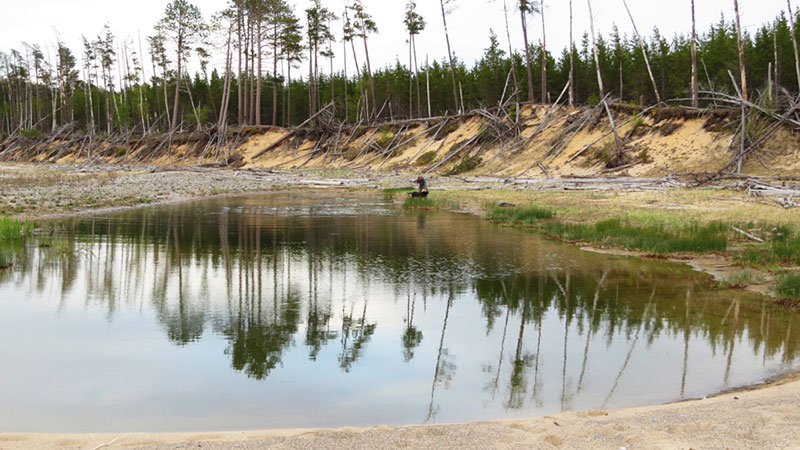
The photo below shows a pond that is located on the beach east of Grand Marais.


History’s Gem of the Month: Grand Marais Poems

June 2016

While searching through my archives to look for something to include as a “history gem,” I came across these three poems about Grand Marais.

Grand Marais by Esther Miller

On the shores of Lake Superior,
lies a special little town.
Inhabitants are very few,
but to me of great renown.
It brings back precious memories,
of my young and frivolous days.
School and teen days delving onward,
through every sort of phase.

I can see that stately lighthouse,
at the end of that rocky pier,
beckoning to ships that are lost in the night
Ships from both far and near.
I can visualize that harbor,
lit up by the vessels therein,
whose men await the storm to abate,
to get home to their kith and kin.

My ears still hear that great fog horn,
the lonesomest sound in the world.
But to many a weary traveler,
it’s like a banner unfurled.
I think of the times I have trod that beach,
when the lake was gentle and mild.
Picked up agates among the stones,
Oh! For the thoughts of a child.

The school overlooking that harbor
has memories too great to be told.
My childhood days so wonderful,
are treasures now that I’m old.
My friends are scattered here and there,
I often wonder if they
sometimes sit and dream like me
of places where we used to play.

The hills we used to slide on,
bob sleds we tugged up and down.
Over the snow banks and ridges,
then right through the heart of town.
in those days no cars were a threat.
We went merrily on our way,
singing at the top of our lungs
as we all went down in the sleigh.

We had such fun at dances.
He held me close to his heart.
not like the dances of today,
cavorting three feet apart.
Two steps, three steps and waltzes,
were more our cup of tea,
But of course – that was way back when,
this generation cannot see.

If I were to go home tomorrow,
I’d probably look in vain,
to find the things I’ve dreamed about,
things are never the same.
But I can keep on dreaming,
of the times that used to be,
and that in my book of memories
is good enough for me.

At Grand Marais by Roland A Beens

I hear the surging breakers roar,
along a far-off northern shore;
To fling their cascades crowned with spray
upon the sands at Grand Marais.
While towering birches, beaches, pine
stand guard along the rock-rimmed line
to Sable Point Light’s friendly ray,
leagues to the west of Grand Marais.

There dreams oft come and vanish too,
like gulls that veer above the blue.
Dreams of another tide that roars,
and breaks against grim, concrete shores—
of city canyons, dark and deep,
men toil to a hurried beat,
and never glimpse, where, far away,
one’s dreams come true at Grand Marais.

Custom soon comes with good and truce,
to draw me from these carefree days,
and lash me to life’s treadmill too,
Far from those sparkling waters blue,
but when the harness galls and sears,
and city life its ugly talons rears.
I’ll have my dreams to light the way
to Sable Light and Grand Marais.

Ode to Grand Marais by Sylvia Truhn (1963)

Oh, lovely Grand Marais, there is no place so fair
as you—a precious gem in setting rare;
when Lake Superior’s waves swirl in your bay,
and scenic wonders usher in each day.
I first laid my eyes on you in days of yore,
and lost my heart to you for evermore.

The years passed slowly, often sad and blue,
until that rapturous day when I return to you.
Since then I’ve walked for miles the sandy beach at dawn,
to watch the sun dispel the fog or kiss a startled fawn;
and in the eve with mirrored lake reflecting rainbow dyes.
I’ve stood among the gulls and heard their haunting cries.

When Spring drifts in on soft, caressing air,
the friendly frogs have sung their serenades beside my lair.
But that charmed season which enchants me more than all
Is crisp, sun-sparked, and artist frost’s be-painted Fall.
Then I have climbed the dunes to view the land,
the indigo of Sable Lake midst green and gold and red and sand.

When Winter winds blast snow across the ice-stilled bay at night,
I love to go exploring the drifted solitude in pale moon-light.
Whatever season comes your way, dear, captivating Grand Marais,
some glorious sight lends magic to each day;
and through the dark your flashing lighthouse beam,
comes dancing through my window pane to brighten every dream.

The only boon I ask of life is but to spend my days
among your priceless beauties, in sunlight and in haze,
and welcome every whim of weather that knocks upon my door,
and capture whiffs of your pure air forevermore.

CUSTOMER AGATE FINDS: Lake Superior Agate Close Up Photos November 2015

The agate hunting season in Grand Marais this year was a good one. Almost every day one or more people came into the museum to show off their beautiful finds. I also receive photos via email attachments. The end of June I received an email from someone asking if a series of rocks they found are agates. Below are three of these specimens – all Lake Superior agates of course.

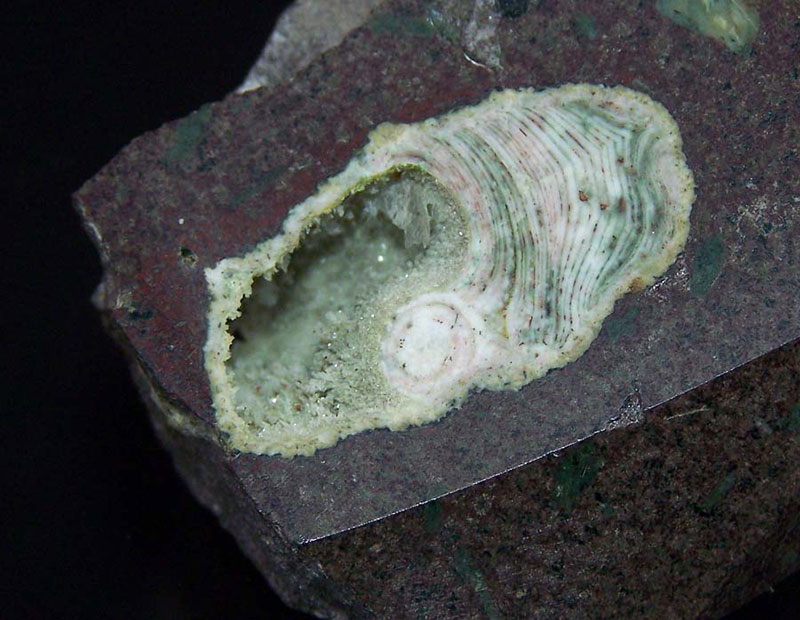
In June Larry and Susan Hales visited the museum to show me four specimens. The red and white rock is a geode, which is rare to find on the Lake Superior beach since they usually do not survive the pounding of the waves.

David Schuder from the Keweenaw sent me photos of some of his summer finds. The first two photos show the cut side and raw side of a beautiful Laker. The third photo is an intricate Lake Superior agate with tubes, as well as some moss and sagenite structure. The structure in the fourth photo illustrates the impact that geothermal activity in the vicinity of the vesical pocket can have on agate formation.

Rod and Karen Thomas from Durano, MI visited the museum in June. They showed off an 18 ounce quartz ball agate that has some banding as well as eye formations. They also shared with me a beautiful Lake Superior agate they found a few years ago that they decided to cut since the raw specimen did not show much of the structure. Once cut, you can clearly see fortification banding as well as interesting center inclusions.

Jan Frederik Valkenberg Castro found the following agate in the mountains of the Dominican Republic. It is always awesome to see the similarities and differences that agates formed elsewhere in the world have as compared to Lake Superior agates.

In August as I was closing the museum one evening, a couple (Mandy and Taylor from Kalamazoo, MI) came in and asked me to tell them what an “A-GATE” is. I gave them a quick definition and convinced them to buy the new agate book, since they were interested in trying to find one. The next day they returned to the museum when Mandy showed me the first agate she ever found. She also explained that they had never heard of agates before and that they were on their honeymoon. I was excited for them and told her that the specimen she found was one of the nicest agates I saw all summer.

Finally, I would like to apologize to Steve Evoy and Susan Bitely who brought agates into the museum the beginning of July. Due to camera issues, I lost some of the photos that, unfortunately, were not able to be recovered. Thus, I could not include these photos in this update.

MINERAL OF THE MONTH: November 2015 – Slag

Throughout the past 17 years since re-opening the Gitche Gumee Museum (after it was closed by its founder 21 years previous), each summer many people bring pieces of slag in for identification hoping that the specimens are agate. Slag can be found on the beaches west of Munising, MI, as well as at several other places in Michigan in other areas where blast furnaces were used to purify ore. I can understand why people think these specimens are agate since oftentimes like agates; they have conchoidal fractures, structure or other patterns, and translucency. I have learned over the years how to let people down easily and educate them at the same time.

Originally there were 29 blast furnaces in the Upper Peninsula of Michigan that were used to melt down and purify iron ore.  Only two sites remain including the Bay Furnace in Christmas, and Fayette on the Garden Peninsula east of Escanaba.  Iron ore was first discovered in the U.P. in the 1840s.  Although the iron ore rock was up to 72 percent pure, it was necessary to remove the impurities and extract the iron.

Iron is purified from iron ore in a huge container called a blast furnace. Beginning in the 1840s in Michigan’s Upper Peninsula, iron ores such as hematite and magnetite were mined and then transported to blast furnaces.  To purify the ore, the rock was added to the blast furnace along with limestone and charcoal.  The mixture was heated to around 2282°F (1250°C) almost 300 degrees below iron’s melting point of 2786°F (1538°C).
In this reduction reaction, the charcoal was used to heat the mixture and add carbon to the chemical reaction.  The limestone served as a flux that helped to catalyze the desired reaction and chemically bind to and remove impurities, such as silica.  In this reaction, the iron oxide was reduced to iron, the carbon was oxidized to carbon dioxide, and the impurities were formed into glass-like slag, which was separated and removed. A picture of the Bay Furnace in its reconstructed condition is shown below.

CITES: https://en.wikipedia.org/wiki/Slag

History’s Gem of the Month: Gitchee Agomowin

November 2015

I have hundreds of documents in the museum’s archives, all saved by the museum founder (Axel Niemi) and his family. One of the items I have is a copy of The Alger Echo, a newspaper published by James Carter. The following article was included in the Fall 1969 issue, Vol I, No 9.

Gitchee Agomowin

In early times, man stayed close to the shore when traveling on Lake Superior; Their light crafts were no match for the lake in its angry moods. Indians and early French knew well the sheltered spot they both called Great Bay or Great Harbor – “Gitchee Agomowin” in the Chippewa language, and Grand Marais in French.

Use of the harbor on the long stretch of shelter-less coast began centuries before recorded history. Activity there was noted in earliest French accounts, and it was mentioned frequently by most travelers from that time on.

Grand Marais Harbor 1903

After a sharp decline in 1910 following the abandonment of the Manistique Railway, Grand Marais settled into a small but stable village where fishing and lumbering and later, tourism, provided a livelihood for this historic and beautiful community.

CURRENT GRAND MARAIS SCENES: November 2015

NOTE: More Grand Marais scenes are posted often on my blog at www.agatelady.blogspot.com and on my main personal Facebook page at https://www.facebook.com/karen.brzys . I also post agate photos, shared mostly on various Facebook rockhounding sites, to the museum’s Facebook page at https://www.facebook.com/pages/Gitche-Gumee-Agate-and-History-Museum.

For this webpage update, I have selected some of my favorite pictures that I took in the Grand Marais area between July and early November of this year.

Those of you who have followed my webpage and my blog know that I love being in the right place to take photos of animals in nature. During a hike in the western part of Grand Sable Dunes, a friend of mine spotted the snowy owl shown below.


I also take many pictures of Lake Superior sunsets. One that I took late summer is below.


In early September I went on a hike with friends in the Pictured Rocks National Lakeshore. We hiked the Chapel Loop, which is around 9.4 miles long. Two photos are below.

This past two years we have seen a considerable amount of erosion on the local beaches. It is difficult now to walk west of Grand Marais to the Sable River. Also, my favorite agate hunting beach east of town is no longer accessible. A photo of the bluff is shown below.


The fierce storms and the waves that result are responsible for the erosion. A series of three photos I took of the lighthouse at the end of the breakwall document some of these waves.

This has been the warmest and most beautiful fall since I moved to Grand Marais in 1994. Below are a few of the fall photos.


Below is another fall photo of Sable Falls.


Of course, I have to include a couple fall photos of Sable Lake and one of the Grand Sable Dunes.