ROCKHOUNDING AND ADVENTURE TRIPS: Mackinac Island – April 2008

For the past 21 years, a group of us women have gone on a weekend retreat away from husbands, kids, and work responsibilities. For the second year in a row, we have traveled to Mackinac Island. It is a real trip to go this time of year before other tourists arrive. With only around 350 full-year residents, the island’s population is about the same as that for Grand Marais. Although the weather was not terrific (we were rained on 3 times — each time we went out for a walk)l a good time was had by all.

Below is a picture of the Mackinaw Bridge, taken from the bluff overlooking the city. I’ve also included a picture of the Grand Hotel taken from the ferry. As many of you know, the only way to get around the island during the non-winter months is by foot, bicycle, or horse. Notice the bikes lined up in the picture wherein some of our group is pushing a luggage cart to the ferry dock.

History’s Gem of the Month: Cedar Stump article from 1962

April 2008

The following newspaper clipping was found among my mother’s keepsakes. For those of you who have been to Grand Marais and noticed the wood tiled ceilings in various homes and businesses (including the Lake Superior Brewing Company), these tiles were made at the factory owned by Harry Habbershaw. The cedar stump constructed by Mr. Habbershaw survived until around 8 years ago when it finally succumbed to the weather and rotted away. Township officials recorded the history from the stump and hope some day to reconstruct it.

Cedar Stump Speaks of Pride, Joy and Sadness
By Harry C. Sahs
Detroit News (1962)

A tree woodsmen spared when they cleared land for the village of Grand Marais, Mich., lived on to tell the story — literally. A slab cut from a red cedartree well over 100 years old stands today in the village square. Lettered on its varnished face is the story of a town which has known joy, pride, fortune, disaster, famine and near-despair.

It took Harry Habbershaw, president of Superior Wood Products, Inc., and a college student, Dawn Ostrander, half a year to gather accurate information and to inscribe it on the tree trunk. Examples:

  • 1820 “I’m a very small tree. I watch Lewis Cass survey the land on which I stand.”
  • 1880 “A new lumber mill has things buzzing.”
  • 1900 “Grand Marais is now a town of over 3,000 people. The population is growing and so am I.” (Population in 1962 has dwindled to about 600.)
  • 1904 “Fire destroyed an entire village block.”
  • 1933 “Depression and everybody looks hungry. Sixteen trolling craft attract sportsmen.”
  • 1955 “The lamprey eel has taken its toll.”
  • 1960 “The town’s efforts are directed to the tourist trade. The town has a new face for our first homecoming.”

Not yet recorded is last year’s disastrous fire at Superior Wood. The firm is hoping to rebuild with aid of a government loan.

The cedar stands ready to receive the town’s final chapters.

MINERAL OF THE MONTH: April 2008 Shadow Agate

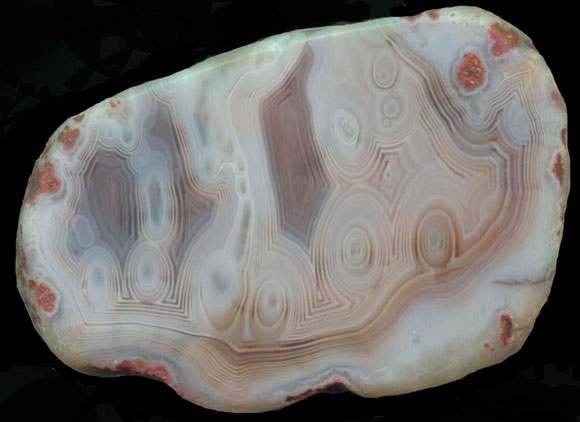
The mineral of the month is my favorite agate: the shadow agate. This specimen was picked up off the Grand Marais beach by the museum founder, Axel Niemi. He found it in 1925 when he was just eight years old. He had it for almost 40 years when he finally sliced the agate, discovering the intricate banding. The best shadow agates in the world come from Lake Superior, Botswana Africa, and Queensland Australia.

Shadow agates exhibit an optical effect of movement across the bands. Depth is perceived from light penetrating and bouncing between alternating clear and opaque layers. When you move these agates back and forth, shadows can be seen racing across the surface. Many factors contribute to the shadow phenomenon including the regularity, contrast, distance, and depth of the bands. When the right conditions exist, light disappears into the clear chalcedony bands and is not reflected back out to the eye. When little or no light is returned to the line of sight, we interpret this as a dark region, or shadow.

CURRENT GRAND MARAIS SCENES: April 2008

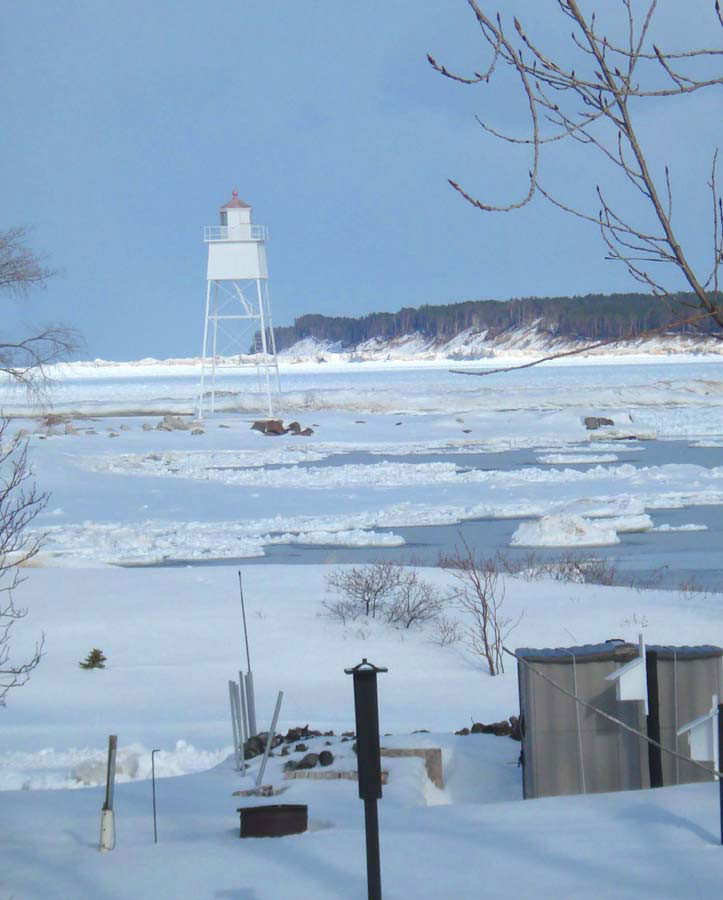
The current Grand Marais scenes for this month include pictures taken at the beginning of the month before I went downstate to conduct the Gitche Gumee Gatherings. As part of my continuing new exercise routine, I walked across Sable Dunes to get the picture of the dunes and iceberg row. I just love the dunes in April with the contrasting colors of sand and snow. The Iceberg Splash photo was taken from the beach in front of Woodland Park. The Snow Trees picture was taken on H58 East just past the school forest. That blizzard dumped well over a foot of heavy snow, which caused a power outage for 1-2 days, depending on which side of town you live on. This scene certainly looks more like January than it does April.


History’s Gem of the Month: 1915 Rules for Teachers

March 2008

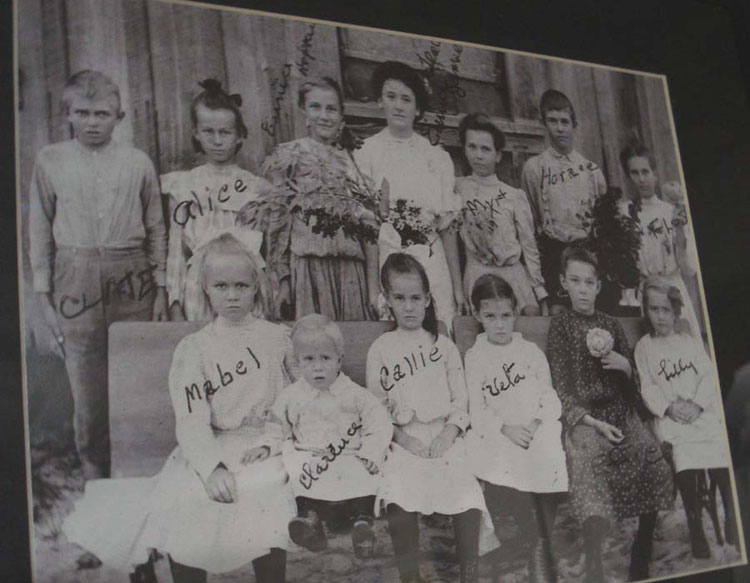
While in the Sarasota, Florida area in March, one of the places we visited was the Crowley Museum. I must admit that the $7.00 admission per person a little steep for what the museum had to offer, but there were some interesting items. One of my favorite items was a list of the rules for teachers from 1915. Although these were the rules for the school system located around 15 miles southeast of Sarasota, I imagine that similar rules were in place in Grand Marais. If these rules were in effect today, do you think there would be any takers for the job?

1915 Rules for Teachers

  1. You will not marry during the term of your contract.
  2. You are not to keep company with men.
  3. You must be home between the hours of 8pm and 6am unless attending a school function.
  4. You may not loiter downtown in ice cream stores.
  5. You may not travel beyond the city limits unless you have the permission of the chairman of the board.
  6. You may not ride in a carriage or automobile with any man unless he is your father or your brother.
  7. You may not smoke cigarettes.
  8. You may not dress in bright colors.
  9. You may under no circumstances dye your hair.
  10. You must wear at least two petticoats.
  11. Your dress must not be any shorter than two inches above the ankle.
  12. To keep the schoolroom neat and clean, you must: sweep the floor at least once daily; scrub the floor at least once a week with hot soapy water; clean the blackboards at least once a day; and start the fire at 7am so the room will be warm by 8am.

The photo below is from the class in this Crowley school in 1915.

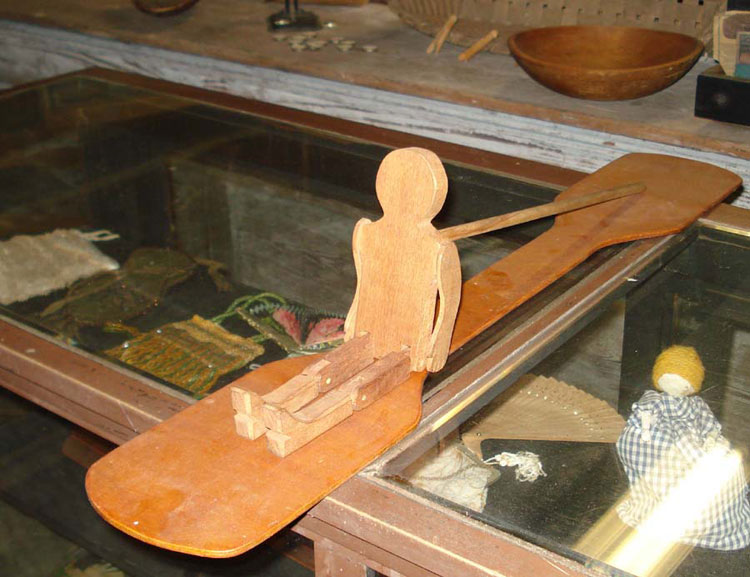
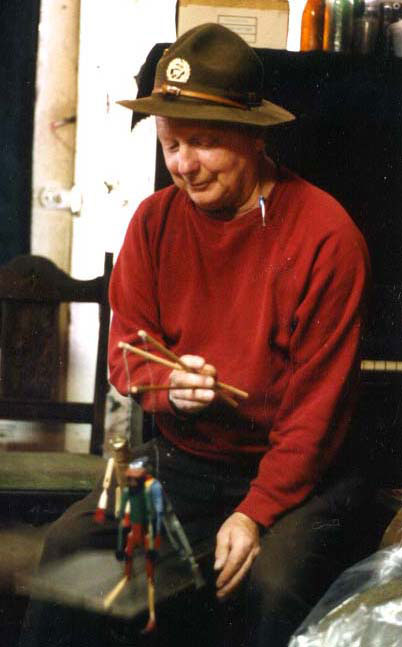
Also at the museum, was a carved dancing puppet. Below is a picture. It reminds me of some of the dancing puppets that the museum founder, Axel, carved.


MINERAL OF THE MONTH: March 2008 Lake Superior Agate

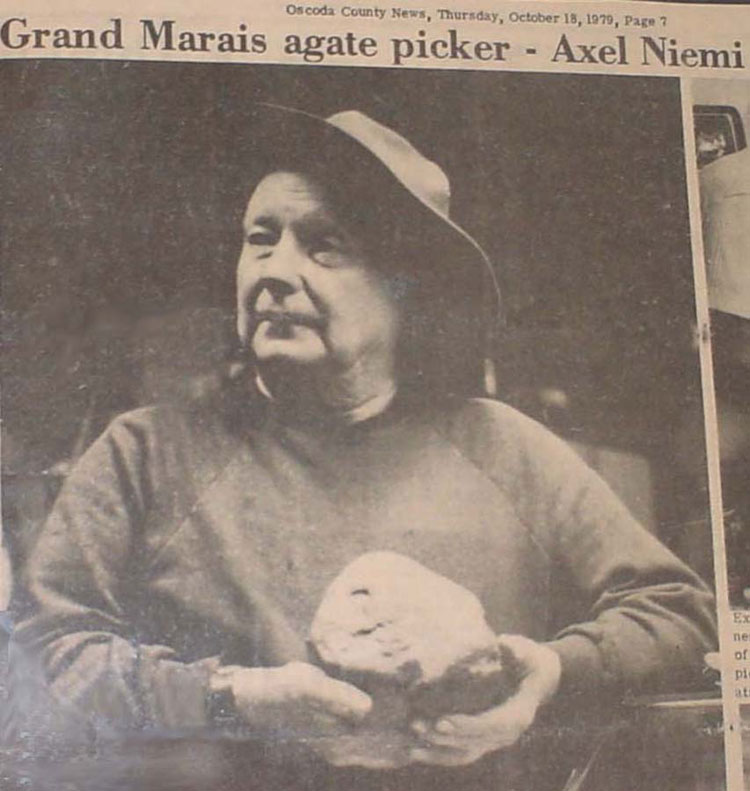
It has been quite some time since I designated the Lake Superior Agate as the mineral of the month. In honor of the museum founder, I am featuring his 5.5 agate as the mineral of the month. He found this agate at the base of Grand Sable Dunes in 1958. He had it for many years before he gathered up the courage to cut a slice off the end. I am glad he made that decision, so that I didn’t have to. I have always wondered when he cut the agate. While preparing this month’s webpage update, I noticed for the first time the date in the article that appeared in the Oscoda County News article about Axel and his big agate. The article was published in October of 1979 and appears to showing the agate before it was cut. Since Axel left Grand Marais in around 1984 to be closer to medical facilities for his ailing wife, he must have cut the agate sometime between 1979 and 1984. If this is true, he had the agate for over 20 years before he cut off the end. If any of you remember anything more about when he cut the agate, please give me a call at 906-494-2590 or send me an email at karen @ agatelady.com.

The first photo shows the carnelian eye pocket that Axel spotted from what he claimed was 50 feet away. The next photo shows that whole side, which is the opposite side from where Axel took the slice off the end. The third photo shows the conchoidal fractures on the top of the specimen. Although you certainly can tell that it is agate, you would not have expected the banding quality that was exposed with the cut, shown in the fourth photo.

The last photo shows the agate face that resulted when Axel sliced off the end. Before it was cut, the agate weighed 5.5 pounds. Just for perspective, the cut face is 6” wide and 3” tall. The agate is also 4” deep. Over the last 10 years since opening the museum I have seen a lot of agates come off the beach. All in all, though, I still have not seen one that beats Axel’s 1958 wonder.

CURRENT GRAND MARAIS SCENES: March 2008

Winter just doesn’t want to leave the Upper Peninsula. Since the wind has been shifting, ice flows are moving around the big lake. In the first photo that was taken from Sable Falls Creek (second creek) looking back towards town, you can see all of the floating ice on the north side of the icebergs.

The bay has been frozen over most of the winter for the first time in many years. It didn’t start to break up until the last week of March, as currents came in from the channel to chip away at the frozen bay. This shot was taken from the balcony of one of the condominiums out on Coast Guard Point.

The third weekend of the month, my friend, Scott and I, skied from the parking lot at Agate Beach past second creek. Although it is dangerous to go out onto the icebergs, we carefully climbed to the top of the first row that was situated over the edge of the beach. The next photo was taken looking west from the top of this first iceberg row. The last shot was taken from beach level, just past Sable Falls Creek. You can see from this last photo that the icebergs are around 20 or 30 feet tall!


CUSTOMER AGATE FINDS: February 2008

Dan Kinney from Sault Sainte Marie, MI has made the web page again. If you remember, last summer he found the large brown agate, which he later donated to the museum. When he donated the agate, he said that he would just have to go out and find a bigger one. Well he did. Just before the snow started to pile up, he managed to find this pounder. It is a paintstone agate with zillions of bands that don’t show up too well in this photo. None the less, it is an amazing find. Dan asked me to face polish the specimen to accentuate the banding. I am glad I had the chance to “dress up” this agate.

When I went to the Soo to deliver the agate, as well as to run errands, I was able to finally see some of Dan’s agate jars. Wow!

History’s Gem of the Month: Unusual Wedding Invitation

February 2008

Unusual Wedding Invitation

I have seen a copy of Axel’s wedding invitation before. In fact, I have one on display at the museum that Axel mounted onto a board. However, when I looked through some of my mother’s things, I came across the copy that was sent to my grandparents, Mr. and Mrs. Harold Richards. I must say, that Axel’s wedding invitation was as unique as he was.


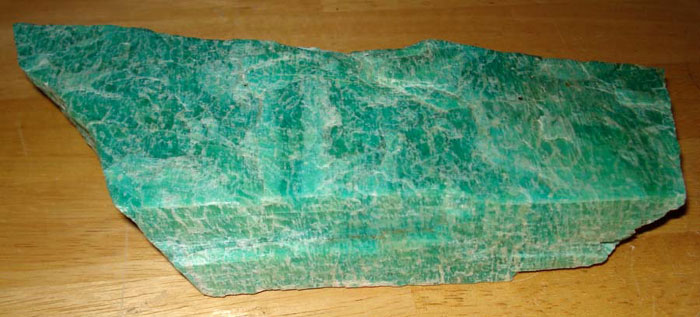
MINERAL OF THE MONTH: February 2008 Amazonite

Amazonite, sometimes called Amazonstone, is a layered form of microcline feldspar; it was originally named after the Amazon River when similar green stones were found there. However, no deposits of Amazonite have ever been found near the Amazon River. Amazonite is a rare mineral. Originally, it was obtained from the Limen Mountains in Russia. More recently, it has been mined in the Pike’s Peak area of Colorado as well as in Madagascar, Canada, Italy, and Brazil.

Although Amazonite does exhibit a beautiful green color when polished, it is difficult to fashion into jewelry because it easily fractures. Most people believed that the blue-green color was due to copper compounds. Scientists discovered in the mid-1980s, though, that the color is caused by small quantities of lead and water.

Amazonite is a relatively soft stone, ranging from 5-6 on the Mohs scale. It has a specific gravity of around 2.56. It has a vitreous luster and can be translucent, or opaque if it contains a greater amount of impurities. It has a conchoidal fracture, but an also split between the layers. Because of the crystal structure within the mineral, it produces the schiller effect similar, but not quite as dramatic, as Labradorite.

It is thought that amazonite is a soothing stone that can improve self-confidence. It can also inspire confidence and positive attitude, and therefore can also diminish fear and anxiety.