CURRENT GRAND MARAIS SCENES: Fall 2010

This has been an incredibly windy fall. The winds started Labor Day weekend and have continued off and on (but mostly on) for four months. In the Grand Marais area, we have had a few storms with wind speeds over 60 mph; one storm clocked winds at 84 mph!

We also have had a fairly normal start to the winter. In Grand Marais, we only have around ten inches of snow on the ground as of mid-December. There are areas south and west of town that have well over two feet! Due to the blowing and drifting, there are also several areas in the local woods and in the dunes with drifts that are several feet high.

The photos featured this month in Grand Marais Scenes start with a couple of fall pictures. Each September for the past ten years my sister, Diana, has visited from Holland, MI. We decided several years ago to explore the Upper Peninsula so that we can hike and take pictures. This year we rented a cabin and spent a couple of days having adventures in the Porcupine Mountains. What a treat! We happened to hit peak fall colors and also enjoyed spectacular weather. Here is a shot I took on a hiking trail that overlooks Lake of the Clouds.

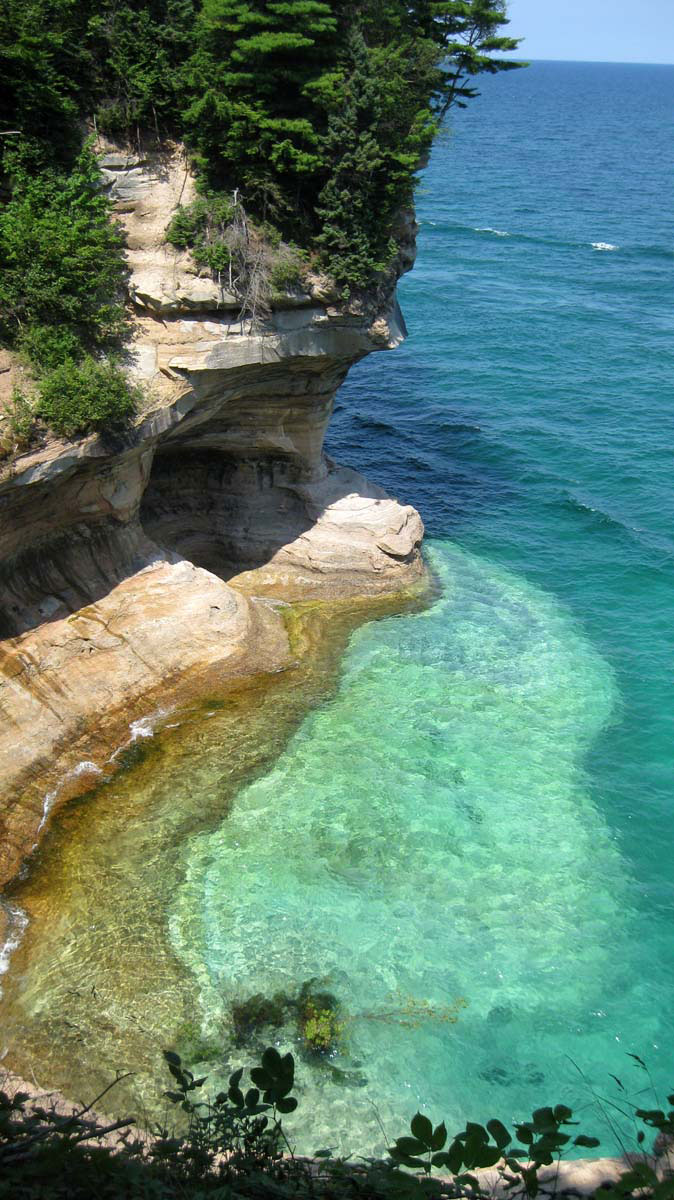
In between shows during the few days this fall I was home, hiking friend Wendy and I were able to venture out a couple of times. Before the snow started, we hiked the Chapel Loop in the Pictured Rocks National Lakeshore. This is around a nine-mile hike that takes you past Chapel Falls, Chapel Rock, Mosquito Beach, and Mosquito Falls. A couple of pictures taken during this hike are below. The first shows the fall colors on the trail to Chapel Falls.


Chapel Falls Trail

The next picture was taken of the cliffs located at the base of Grand Portal Point.

Wendy and I also hiked from the Log Slide to Au Sable Lighthouse a few times. Below is a picture of the lighthouse as well as one taken on the beach just east of the lighthouse.

NOTE: If you are interested in seeing more pictures of the Grand Marais, MI area, please visit my blog at www.agatelady.blogspot.com. I am not exactly sure what a blog is supposed to be. I use mine as a photo journal.


CUSTOMER AGATE FINDS: August and September 2010

There are several great agates to post in this month’s update. Let’s begin with a whopper 16 pound agate found decades ago by the grandmother of Paul Mihelcich near the tip of the Keweenaw Peninsula, located in Michigan’s Upper Peninsula. She knew it was agate because of a fracture that exposed the banding. It has the typical pink paintstone color that is common in Keweenaw agates. She had it cut in half at the Seaman Mineral Museum. Paul still has both halves.

Next up is my friend, Denise Reitz from Interlochen, MI, who found an agate as well as a spirit stone. We call spirit stones any specimens that have a hole all the way through them. This is a perfect spirit stone that is ready to wear as a pendant. The agate was “glowing” at Denise as she walked on the beach in an orientation that allowed the sun to shine through the rocks.

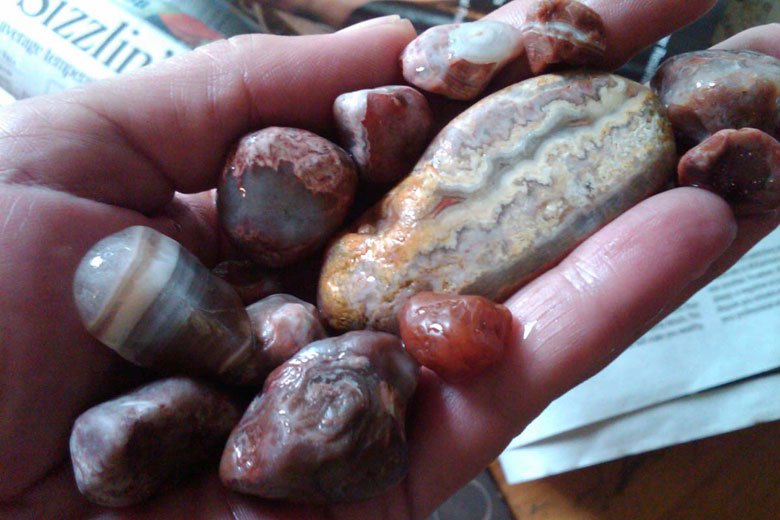
One of the caretakers of the Point Iroquois Lighthouse, located in Brimley, MI, had success agate hunting. Roxanne Tobey, from Cedar Park, Texas, discovered the beauty of Lake Superior agates. She found a few on her own and then participated in one of the Gitche Gumee Museum’s rockhounding classes. Here are a few of her finds:

The next handful of agates was found by Rhonda Riebow from Dewitt, MI. She sent the photo as an email attachment with the following note:

My husband and I just returned from five days in the UP–we had a great time! We visited the Agate Museum and enjoyed it immensely. My husband was especially taken with the Shark and its history. I bought your new book while we were there…I had already found a couple little agates (one is an eye agate!) but learned to “think like an agate” and then found a bunch more. Our final day camping at Muskallonge Lake I made one final early morning sweep before packing up. Not 15 minutes before I had to leave the beach I found the big one (well, big to me) in my hand! I was so glad I opted to go to the beach one more time!!!

The last agate was found in the Grand Marais area by Joel Brussell, who was visiting from down state.

MINERAL OF THE MONTH: August and September 2010 – Polyhedroid Agate

The mineral of the month for August/September is the Polyhedroid Agate. The unique polyhedroids are strange looking agates with geometric shapes that have smooth flat sides. Their shape appears more angular than the typical almond-shaped agate, but there is no consistency to the angles of formation. Most are either triangular or trapezoid and hollow, with the bands running parallel to their shape. Although no one knows for sure how these agates formed, there are at least two theories. Some believe that polyhedroid agates are pseudomorph replacements of other, more angular crystals. Another hypothesis is that they formed in spaces between other crystals, perhaps calcite. Unlike the rest of the Brazilian agates found in the southern part of the country, these unusual agates are found at a single site in the northern state of Paraiba. There has been no mining of polyhedroids in recent years. Most were mined during the 1970s. Believe it or not, a few polyhedroids have also been found in the Lake Superior region and in Wyoming.


History’s Gem of the Month: 1958 Detroit News Article about Axel Niemi

 August/September 2010

1958 Detroit News Article about Axel Niemi

When I work on the web page update, the last segment I always do is the History’s Gem of the Month. I have a couple of closets in my house jammed with museum archive materials. It is always fun to pull out a box and look through it to find something interesting.

The first thing I pulled out this time is a 1958 Detroit News Pictorial Sunday Magazine, published on August 31, 1958. On Pages 10 and 11 there is the following article about Axel Niemi, the founder of the Gitche Gumee Museum. As is his usual fashion, he added his comments in the margins. Axel says that the second paragraph is a “big lie.” That is probably true on several fronts. One thing for sure is that Axel started to collect agates when he was a young boy, not after World War II as the article suggests. He started numbering and journaling agates during elementary school.

All That Glitters….
By Harry C. Sahs

If agates were gold nuggets, Axel A. Niemi would be the richest man in Michigan. Of all the “rock hounds” who have combed the storm-tossed beaches of Lake Superior for agates, probably none has found as many of the beautiful rocks as Niemi.

Known as the “agate king” of Grand Marais, Niemi has been an avid collector since he came home from two and a half years of Army service during World War Two. Although he had spent all his life where agates are relatively common, Niemi didn’t “get the fever” until he met an Australian in the South Pacific who carried a clear orange crysolite faceted agate.

Today, self-taught in the art of cutting, grinding, sanding, and polishing the semi-precious stones—and with a study course in gemology under his belt—Niemi’s “agate king” title goes undisputed.

The 40-year old collector believes he has found the second largest agate ever discovered in the United States. It is an almond-shaped translucent stone weighing five and a half pounds and valued at $200. Only the 10 ½ pound stone now in the Smithsonian Institution in Washington, D.C., surpasses Niemi’s find.

Best time for agate hunting, says Niemi, is immediately after a violent storm when deep waves churn the lake bottom and toss up new rocks on the beach. Even then, however, it’s no easy job to find the elusive agates. It takes time—and patience.

CURRENT GRAND MARAIS SCENES: August and September 2010

We went from a hot August to a cool and windy September. My busy schedule has not allowed time for a lot of hikes. However, I was able to snap off a few pictures while visiting friends around town.

Since I didn’t have time to implement an August update, I’ll include pictures in this update from both August and September.  Let’s start with a picture from this year’s Grand Marais Music and Arts Festival.  We locals really appreciated Al Young returning to the stage – this time featuring his son, Nolan, on the saxophone.

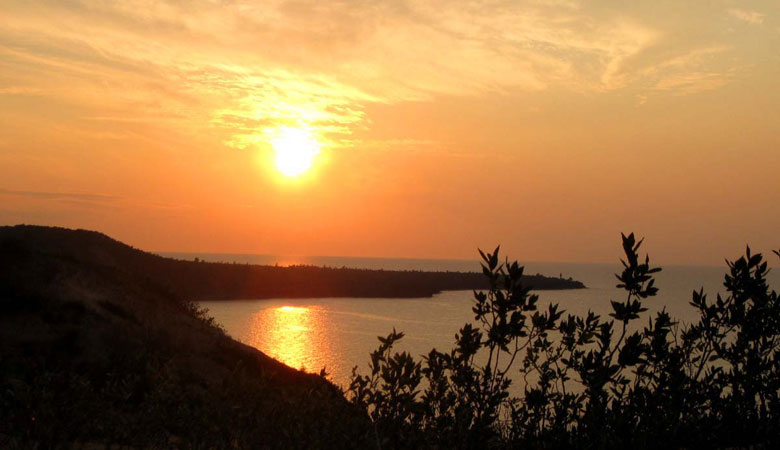
There were several spectacular sunset photos from which to choose. I decided I like this picture taken while hiking in the dunes.

Many of the storms that have rolled through Grand Marais this past month have moved quickly. When that happens, sometimes you end up with a rainbow on the back end of the storm. In August, we were treated to a double rainbow over the bay. The rainbow appeared just before sunset, so the low sun angle gave us a special treat in terms of the rainbow’s quality. Thanks to Andy Mitchell for supplying the full-rainbow shot that my point-and-shoot digital camera could not capture.

Friend, Wendy, and I have hiked west from the Log Slide a couple of times lately. Here are two shots that were taken from the beach located under the footbridge around ¾ of the way down the trail. Both shots feature Jacobsville sandstone, which is the oldest sandstone in the park. It was formed during the pre-Cambrian period around a billion years ago. It is known for its multi-colored nature featuring iron-red staining. The stone has been quarried in places throughout the Upper Peninsula and has been used to make many buildings.

The storms have created some great picture taking opportunities. While at Whitefish Point in August, I captured the black clouds behind some of the museum’s buildings. Also, the waves have been intense before, during, and after the storms. On September 3rd while I was in Charlevoix at an art show, winds were clocked in Grand Marais as high as 72 mph! From what I have heard, waves were as high as 15 feet with some perhaps as high as 20 feet.


CUSTOMER AGATE FINDS: July 2010

Summer is here so there have been a lot of customer agate finds. This first photo was sent to me from Jennifer Jackman. She and her husband love to agate hunt. You can see photos of their adventures at www.lakesuperiorrocks.net. Pictured below is a nice agate they found earlier this summer in the Munising area.

The next agate was found by Shea Cullum at a gravel pit near Moose Lake, MN when we were there for Agate Days. Shea is the grandson of agate friends, Gerald and Jill Phillips. For his young age he is already a good agate hunter!

While at Moose Lake, Kate Terres from Minnesota came to my booth and asked me about a rock. As soon as I saw this wonderful tube agate, I asked her if I could put it on the web page.

I received an email from Rhonda Riebow a week or so ago. She and her husband, who are from DeWitt, MI, visited the museum and purchased the new agate book. In her email she said that the book helped her to “think like an agate,” after which she found a handful of agates in the Muskallonge Lake area, located 20 miles east of Grand Marais. She has sent the larger flat agate to me for face polishing.

The final agate featured this month is one found by Matt Kaufman. He and his family attended my agate lecture the other night. After I was done with the lecture, Matt came up to me and asked about a rock he had found east of Grand Marais. He found it in three feet of water just off shore and was not sure if he wanted to carry it back to the car. We are all glad that he did! There is botryoidal formation on one end, obvious pseudobands showing through the husk on top, a lot of translucent carnelian, and curlicue formation on the other end. Although there is not obvious concentric banding showing, it is still a terrific 3.5 pound agate! Congratulations Matt!


MINERAL OF THE MONTH: July 2010 – Mookaite Jasper

Mookaite jasper is a sedimentary rock formed when ancient sea bed sediment was jasperized into a mottled and beautiful quartz rock. This decorative rock, which is often used in jewelry, has truly beautiful patterns. It is only found in Australia and has the same earthy colors as those used by Aborigines in their art work. It is fossiliferous made up of the skeletal remains of radiolaria that had skeletal structures made of opaline silica. Billions of their remains were deposited as sediment in the shallow areas of ancient sea beds. When the sea levels declined, the sediments were cemented into solid rock by additional silica carried in groundwater. Colors were added by the remains of other marine organisms as well as minerals in the water. Mookaite includes various forms of silica including jasper, chert and chalcedony. Although most Mookaite contains just the chemical remains of the radiolaria, occasionally impressions of ammonites and other organisms have also been preserved.

Mookaite jasper (also known as mookite, mookalite, mookerite, moakite, moukalite and moukaite) is named after Mooka Creek which is located in the Kennedy Range near Gascoyne Junction, about 100 miles inland from the coastal town of Carnarvon in Western Australia.

This is a popular jasper because of its extreme range in color. It can include many bright colors including red, purple, tan, snow white, ivory white, pink, gold, black, and yellow.

Metaphysical Properties

Mookaite is an extremely soothing stone and can help to relieve stress, tension, and the negative effects of emotional trauma. It can help you to regroup when life gets complex and can also help to enhance strength and endurance to positively affect wellbeing. Some believe that it helps to stimulate youthful exuberance, which in turn can help to slow the aging process. It can also promote courage to help you to face new challenges. Mookaite’s healing powers can benefit glandular, digestive, circulatory, and immune systems.

History’s Gem of the Month: Shipwrecks at Agate Beach

 July 2010

Shipwrecks at Agate Beach

In the museum’s archive I found the photo included below. It shows ships that went aground between Agate Beach and the breakwater that protects Grand Marais Bay.

On the back of the photograph, the following description was written:

On October 20, 1905 at nightfall the second mate of the Turret Crown steamer warned the captain that the storm was increasing in fury. All the day before leaving Sault Saint Marie, the Captain had been drinking. When in front of the Grand Marais, Michigan lighthouse the Captain asked the first mate what lighthouse it was. The captain turned to enter the harbor of refuge but entered on the port side of the pier. The second mate was right in mentioning that the ship would go aground. The captain’s excuse was that he believed the harbor to be Grand Marais, Minnesota. Later a wrecking tug assisted the Turret Crown to deeper water, after which she continued on to Duluth.

The Galatea, a lumber barge, also ran aground during the same storm just west of Grand Marais’ pier. The vessel was a wooden 3-masted schooner built by the F. Wheeler Company in Bay City, MI in 1882. She was 180 feet long, 33 feet wide and 12 feet high. She was driven so far ashore by the waves that the crew could step off onto solid ground by clambering over her stern. Even though salvagers dug a 900 foot channel to her, she was unsalvageable and broke up the following winter. Her sister ship, the, the Nirvana, was being towed by the propeller ship LL Barth. The Nirvana smashed into the pier and was sunk ¼ mile off shore. The crew was saved but the heavy seas pounded the Nirvana to bits. She later washed up east of the piers on the beach.

Research on the internet regarding the Turret Crown shows that the steamer was built in 1895 by the William Doxford and Sons Company in Sunderland, England. She was 258 feet long, 44 feet wide, and carried a gross tonnage of 1,827 pounds. She was used to carry goods by the Canadian Lake and Ocean Navigation Company. Apparently the problem in Grand Marais was not the only incident. On July 22, 1903 the Turret Crown collided with the wooden freighter Waverly near Harbor Beach, MI causing the freighter to sink. She also collided with the William C Mack on May 4, 1913 causing damage to both vessels. During World War I the Turret Crown was used in the Atlantic to transfer goods. After World Work I she was used along the Pacific coast. Below is a photo taken of the Turret Crown at a dock in Seward, Alaska.

The steamer returned to Great Lakes service in 1922. On October 7th of that year she ran aground again off Cove Island in Lake Huron. She was again salvaged and continued service. Her luck ran out on November 2, 1924 when she ran aground and was stranded at Meldrum Point on Manitoulin Island. The metal from her hull was later salvaged and used during World War II.

CURRENT GRAND MARAIS SCENES: July 2010

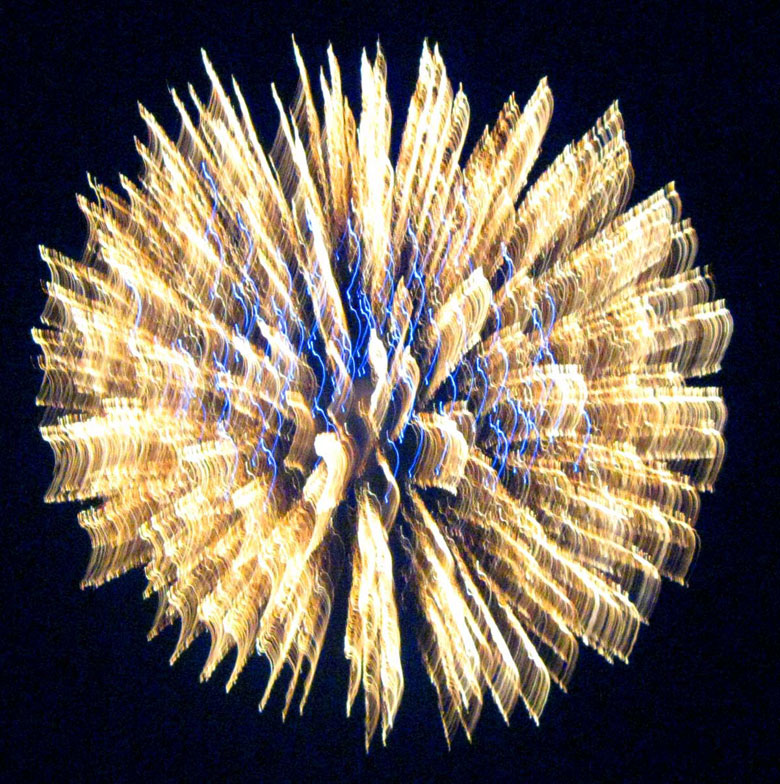
The Grand Marais July 4th celebration was fantastic this year. The weather was warm, but a good time was had by all. I enjoyed visiting with a friend, Marsha Hendrickson, as well as my aunt and uncle, Lynne and Doug Kane. It is a challenge to get the timing right, especially with digital cameras that have a built-in focus delay, but I enjoy taking pictures of the fireworks. Below is one of the shots.


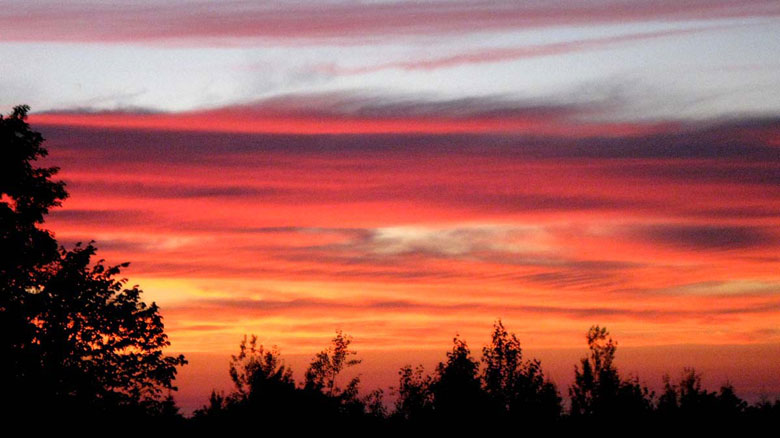
One of the advantages that we have on the south shore of Lake Superior is that we get to enjoy summer sunsets. I was home working and didn’t get down to the beach to capture the sunset over the lake, but even from my house, this fog-enhanced sunset was spectacular.

Things have been so busy lately that I have not been able to squeeze much time in for hiking. That is not a good thing since I am supposed to be training for my 15th Grand Canyon hike. I have until January, though, so there is still time. Last week I traded hours with Candace so I could have Sunday off. So hiking friend, Wendy, and I headed west and hiked the ten-mile Chapel Loop. It was a bit much since we haven’t been hiking, but we faired well and it was a beautiful day. Below are a few of the shots taken during the hike.


CUSTOMER AGATE FINDS: June 2010

Agates found by three different people will be featured this month. First, Victor Irving from Fulton, MI came in with this mostly white agate. Translucency is a very important thing to look for while agate hunting. This agate certainly proves just how translucent Lake Superior agates can be.

The next agates were found by the Kozakov family who visit Grand Marais every year from Brighton, MI to hunt for agates. They had just arrived at 4:00 pm the day before coming into the museum. They already had 4 or 5 glass jars full of higher quality agates plus some other lesser quality ones in a box. The best one they found is featured individually. It was found by son, Adrian. The father, Sviatoslav, found most of the agates in the jar.