Customer Agate Finds May 2020

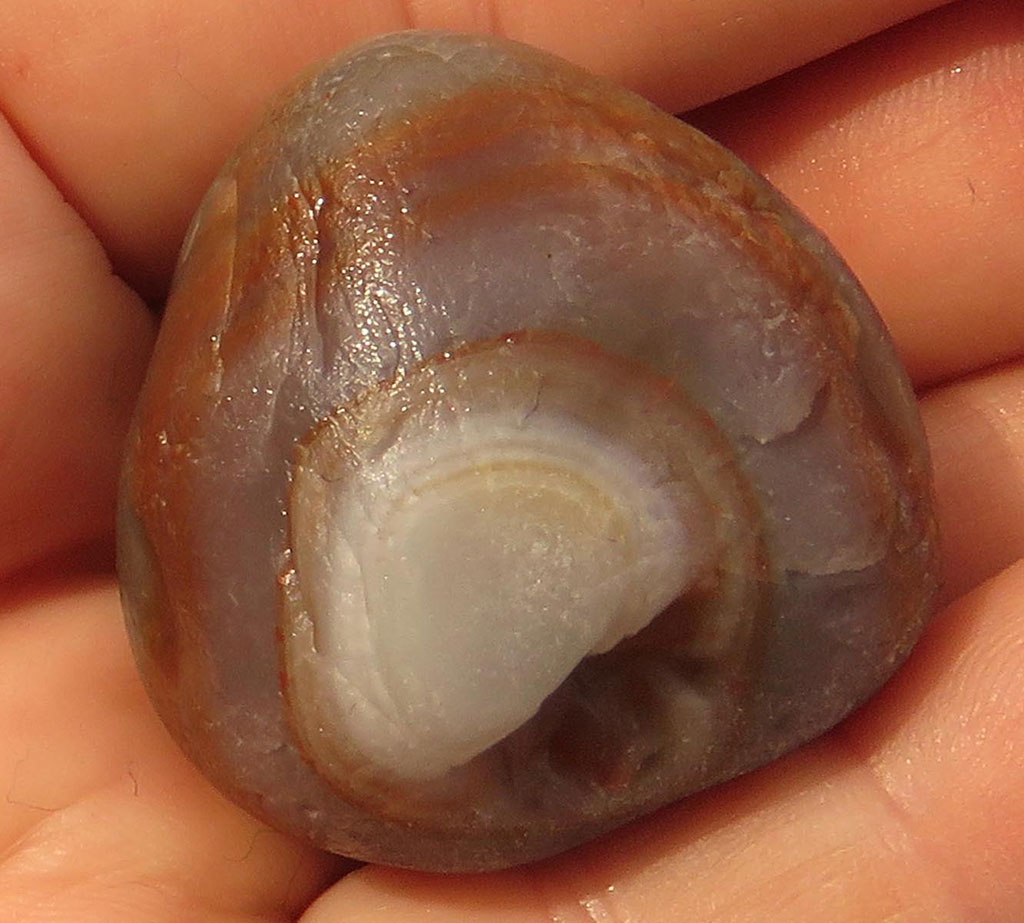
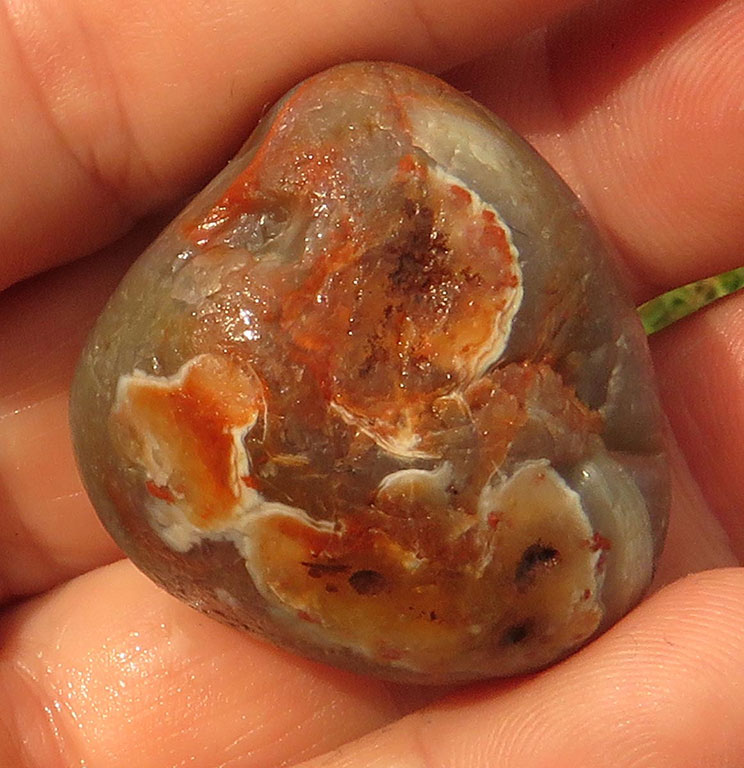
Well, not exactly. Since the museum has not been open, I do not have any customer agate photos to use in this web page update. Instead, I used my USB microscope camera to capture a few close-ups. I will start with some Lake Superior agate close-ups. The first is a candy striper, then a shadow agate with amethyst center fill, next to a banded Laker with alternating layers of amethyst, and finally a shadow agate.

Next, I have a few close-up photos of Mexican agates I acquired at the Tucson show in January.

To add a few more photos to this webpage update, I went back in my archives and found these pictures I took at a Moose Lake show around seven years ago. These large Lakers are from a private collection. The last two photos are the top and bottom of the same peeler agate.

Rockhounding and Adventure Trips – Supai, AZ Grand Canyon May 2019

I have been lucky enough to go on major Grand Canyon hikes 17 times. Three times in the past I hiked to Supai, the only village located within the Grand Canyon. The first time I showed up at Hilltop Parking to meet a friend. He did not show up. I waited an extra day and finally decided to hike to Supai myself. From Hilltop, it is eight miles to the village and an additional two miles to the campground. I was amazed to find out I was the only person in the campground.

The second time I hiked Supai was with my ex, Chris Sarver. The third time was with my youngest son, Jonathan. I gave him “Supai” for his college graduation present. There was no problem getting reservation any of these first three times. In 2018 when Helen and I decided to try to secure reservations at Supai, we found out how difficult it now is. Campground reservations can only be made online. This year the campground sold out for the whole year in just two hours. I spoke with a woman who said their group was successful in getting campground reservations because they had more than a dozen people trying to access the reservation webpage the second it became available for 2019. A picture of the campground, which is a mile long along the river, is below. What is interesting about this campground is there are no designated sites. First come, first get the best spots.

I have hiked the Grand Canyon twice before with my friend, Helen Riley. We attempted to get reservations at Supai before. One time the bridges were taken out in a flash flood so it was not possible to hike the trail. Another time the lodge was under construction and not available. Also, the campground was already full. So, we decided to try to get reservations at the only hotel in the small village. We talked with a mutual friend, Marcia O’Brien who requested to join our adventure. I began calling the lodge the first day reservations could be made, which is the only way to secure a reservation. It took me over 500 calls and several days to finally get through. When I asked for the confirmation number, they said they would send it to me via US Postal Service snail mail.

We knew the dates for our Supai reservation, so we made airline reservations and booked motel rooms before and after the Supai portion of the trip. Then we waited for the snail mail confirmation to arrive. And we waited. And we waited some more. I even wrote a letter in August and donated money to Supai’s flood recovery program. Still no confirmation. Finally, in January we canceled our airline and hotel reservations and planned a different trip to the Smokey Mountains. In February of this year, we finally received the Supai confirmation letter. We canceled our plans for the Smokey mountains and re-booked our reservations out west.

The first week of May the three of us flew from Detroit to Las Vegas. We rented a car, stayed the first night in Las Vegas, and drove the next day to Peach Springs, AZ, which is the closest town to the hiking trailhead to Supai. On the drive, we stopped and explored Hoover Dam.

The road leading to Supai Hilltop Parking is located around ten miles east of Peach Springs. We left as early as possible in the morning and drove the 60 miles down the access road. There is absolutely nothing on that road except for cows (you must be careful driving) and a security checkpoint when you drive onto Havasupai Reservation land.

When we arrived at Hilltop Parking, I knew things were different. We barely could find anywhere to park. Finally, we got lucky and secured a parking space in the main parking lot. It was a beautiful morning with bright sunshine and temperatures in the 60s. We put on our packs and started down the eight miles to Supai Village.

During our descent, when we were still a couple of hours away from the village, it started to pour rain. We were walking down slot canyons and old riverbeds, so I was extremely afraid of flash floods. For the most part, we were not walking along with active waterways, so we were fine. In fact, you do not even see the river during the hike until you are a half-mile away from the village. We donned rain gear, put away the cameras, and trudged on. We were very happy to finally get to the lodge! There was so much rain, it turned the normally blue-green water muddy brown. Even the locals said that it does not happen very often.

The color of the water in the river is blue due to its high lime content. The lime in the water combines with sticks, mud, and leaves to make terraces in the river as well as amazing travertine formations hanging from the cliffs. All the waterfalls are along a trail that continues north from the village. Fifty Foot Falls and Little Navajo falls are first. Then, the trail snakes around the top and down alongside Havasu Falls. The campground starts just after this falls and continues for a mile alongside the river to Mooney Falls. There is a set of chains, handholds, and footholds to descend Mooney Falls. To get to the Colorado River the trail continues for almost six miles. This is not a well-maintained trail and is very rugged, requiring many river crossings. We decided to not be that adventurous. Pictures of some of the waterfalls are below.

As many of you know, I love my Canon SX 60 camera with its built-in zoom lens. The camera came in handy to get photos of the local fauna and flora. The area had recently received a lot of rain so much of the cacti were in bloom. I have never seen so many flowers in the desert!

While I was training for the canyon hike, I aggravated my right hip. After two and a half days of hiking 22 miles and 5,000 feet of elevation change, my hips were extremely sore. I was afraid of damaging them more (and messing up my golf swing) so I decided to helicopter out for $85. I loaded in some of Helen and Marcia’s weight, they started hiking out at 5:00 am to beat the heat, and I joined them at the top. At least I was able to get some cool photos from the air.

We returned to Las Vegas for a couple of nights, had a good night out with dinner and a Cirque du Soleil performance, and headed home. Thanks to Helen and Marcia for an incredible epic adventure!

NOTE: Helkarcia on our shirts and banner represents “Hel” for Helen, “Kar” for Karen, and “Cia” for Marcia.

Rockhounding and Adventure Trips – Grand Marais Rock-On Festival September 2019

A decade ago, the staff at Muskallonge Lake State Park decided to organize a small agate show. In the first few years, the show was quite small and very quaint. As the years went by, the show grew in popularity until it exceeded the ability of the state park to handle the show’s large size. Since the park was under major construction and renovation this summer, they canceled the show in early spring. A movement was started on Facebook to move the show to Grand Marais. Although I was not involved with the Facebook push, I was asked to lead the effort. Before agreeing to do so, I called the superintendent of Muskallonge and asked if they wanted the show back after this year, or whether they wanted the show to stay in Grand Marais. Park staff admitted that the show had grown beyond their capacity, so the decision was made to permanently move the show to Grand Marais.

The objectives for the Rock-On Festival are to:

  • Provide a venue for rockhounds to feed their passion, purchase specimens and other related items, and increase their understanding of rocks and minerals.
  • Attract visitors to Grand Marais in a slower tourism week situated between the summer season (ending on Labor Day), and before the fall color season to help generate revenue for Grand Marais businesses.
  • Provide a venue for dealers to sell their rock and mineral items.

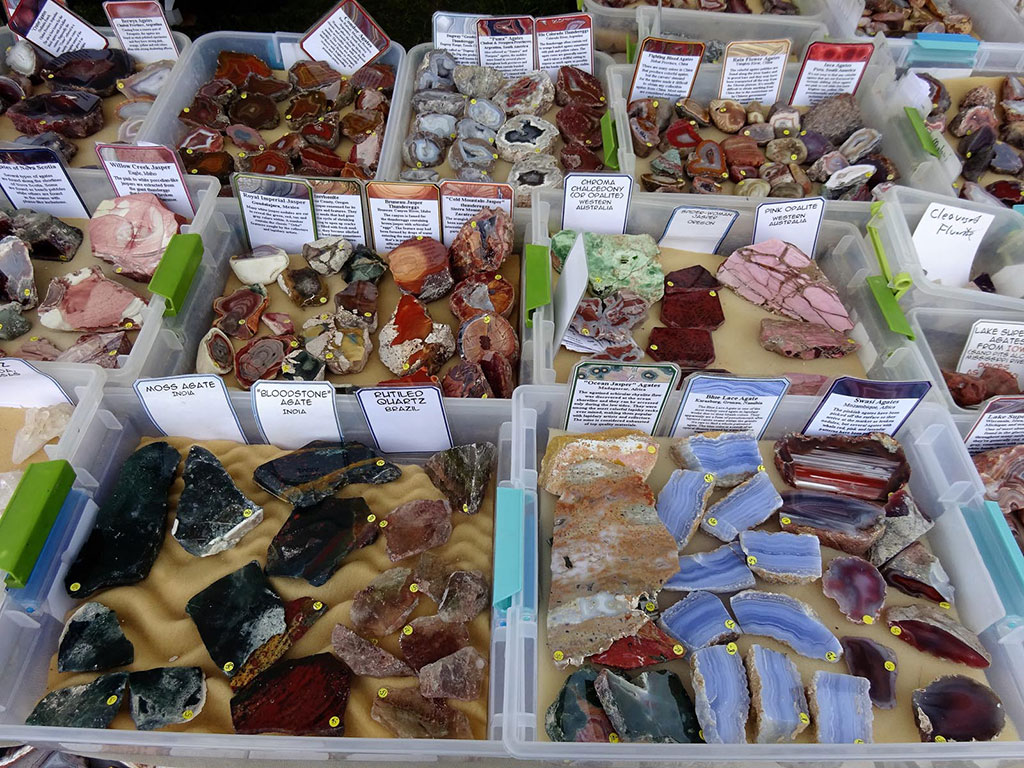
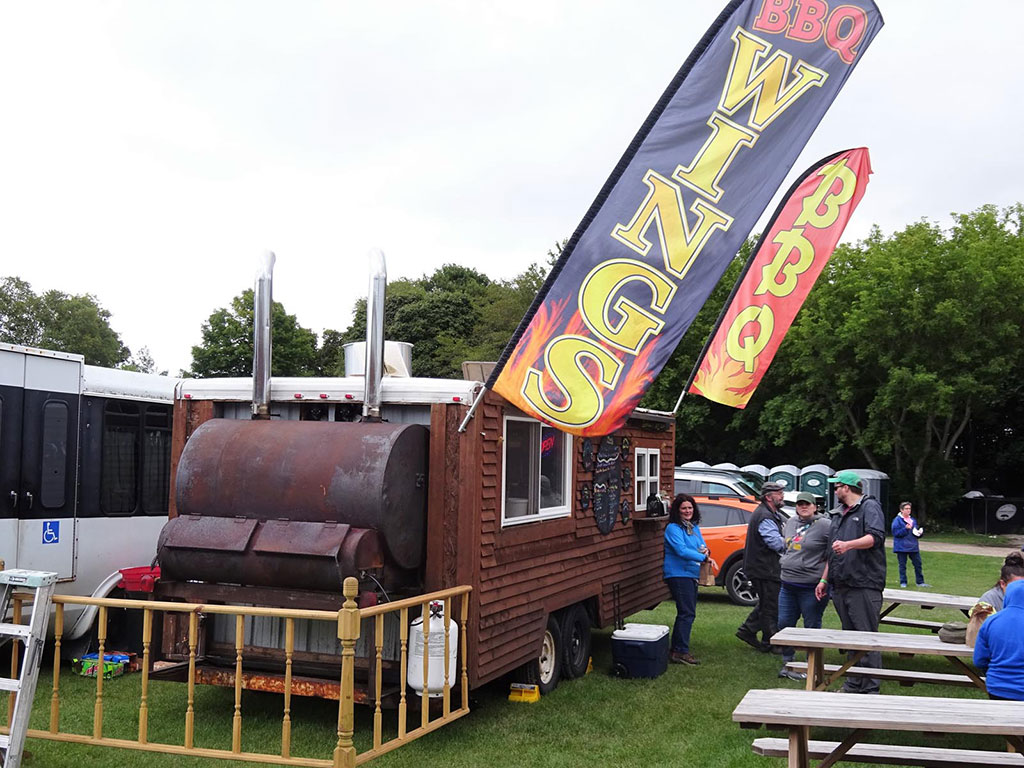
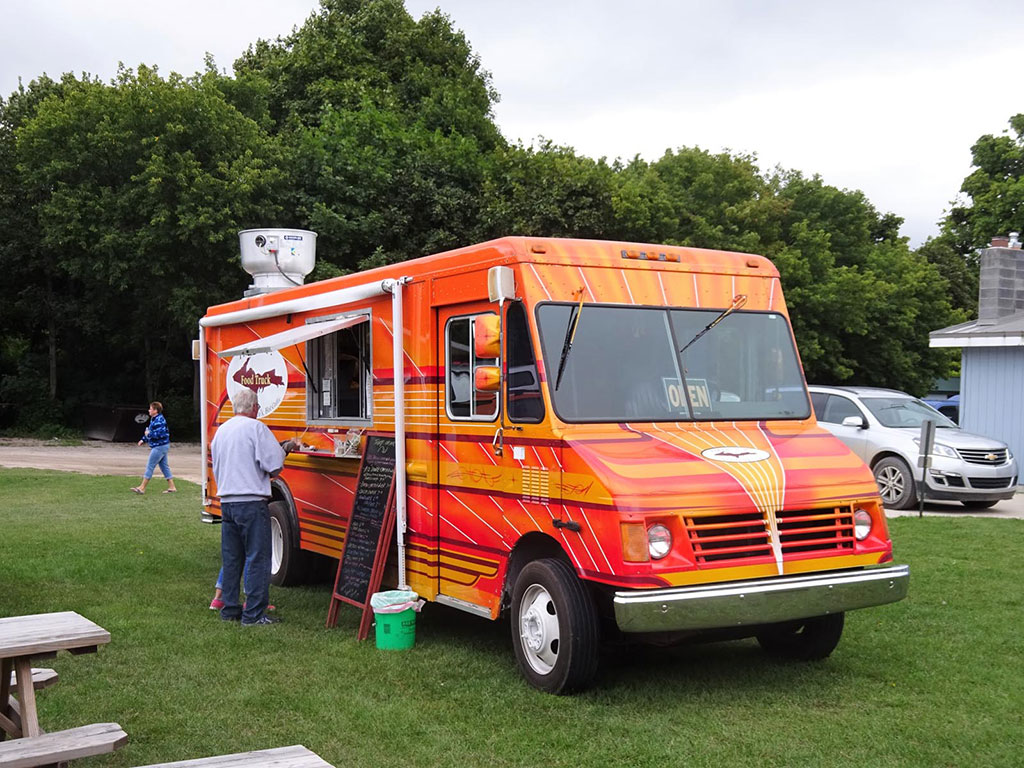
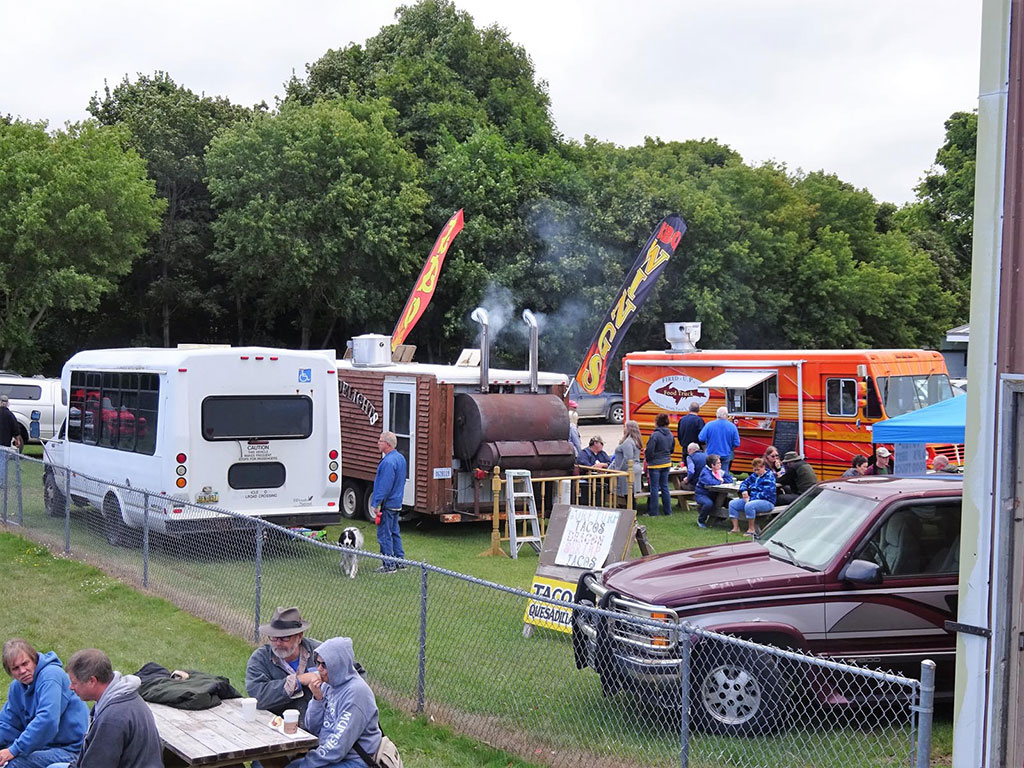
This show was extremely successful. We had more than 1,500 attendees, 25 dealers who rented 33 booth spaces, six food vendors, and seven information presentations. The food dealers included four food trucks, breakfast served both days by the Grand Marais Snow Trails Club, and a Keynote Speaker dinner on Saturday night served up by the Grand Marais Women’s Club. This dinner sold out since it was limited to only 125 people.

Thanks to everyone involved in helping to make this inaugural rock and mineral show a success! It will be held again next year at the Community Center in Grand Marais, MI (located on Brazel Street across from the Gitche Gumee Museum) the weekend after Labor Day (September 12-13, 2020). Once more information is available about next year’s show, please go to grandmaraisrockonfestival.com. You can also go to our Facebook page at www.facebook.com/Grand-Marais-Rock-On-Festival.


Mineral of the Month – Fluorescent Syenite “Yooperlite*” November 2019

Syenite is a coarse-grained intrusive igneous rock formed when molten lava cooled slowly under the Earth’s surface. It has a general composition like granite.

Ultraviolet Light (UV) is light categorized between the wavelengths of 100 nm and 400 nm. These wavelengths are shorter than what humans can see.

Fluorescence is the emission of light by a substance that has absorbed light in the ultraviolet range of the spectrum and emits light in the visible spectrum. The emitted light has a longer wavelength, and therefore can be visibly seen, than the exciting invisible UV wavelength. Fluorescence happens on the atomic level. When a substance fluoresces, the electrons in the atoms reacting to the UV light get excited by the wavelength and use the energy to jump away from the nucleus to a higher electron orbit. Nuclei do not like empty electron shells, so they pull electrons back down to fill the empty slot. This movement back down releases energy, which is displayed by light in the visible spectrum.

“Yooperlites” contain a variety of sodalite with an impurity that reacts to the specific UV wavelength of 365nm. This wavelength was developed to detect cat urine, as well as for use in manufacturing processes. Fluorescent syenite has minimal fluorescence with a 395nm wavelength.

In most cases, syenite is not fluorescent. In most cases, sodalite is also not fluorescent. The suspected source of this variety of syenite that has a fluorescent form of sodalite is believed to come from central Ontario. The rock was transported to the Michigan area 8,000 to 10,000 years ago by glaciers and/or by icebergs on Lake Algonquin, a larger predecessor lake to Lake Superior. The east coast of Lake Algonquin was in the area of the fluorescent syenite deposit. Thus, once all the fluorescent syenite specimens are picked up from the Lake Superior beaches, the supply will be gone since it cannot be replenished – at least until the next glacier scrapes across the landscape. So PLEASE, if you go out to find these amazing rocks, just take a few and leave the rest for others to find.

Some people have attempted to find fluorescent syenite during daytime hours. This is almost impossible since the syenite looks very much like granite. Without the 365nm wavelength, and the darkness needed to see its effect, there is no way to identify the fluorescent component during the day.

Both granite and syenite are similar in that they are intrusive igneous rocks that formed when molten magma cooled slowly under the earth’s surface. During cooling, minerals of the same type combine to form mineral grains. The slower the cooling, the larger the mineral grains. The difference between granite and syenite is primarily due to the quantity of quartz. Granite has as one of its components more than 20 percent quartz; syenite has five percent or less. In the photos below, notice the granite on the left is “whiter” due to the quartz. Syenite is on the right with little to no white quartz.

Here are two more photos of syenite.

The search is underway to find other deposits of fluorescent syenite. One of the museum’s customers had several samples of syenite he collected on the north shore of Lake Superior. He brought some into the museum and it was not at all fluorescent. Once these glowing rocks have all been picked up from the beach (and we are almost there already), there will be people searching for a new deposit source.

*The term “Yooperlite” is a trade named by Erik Rintamaki who discovered these fluorescent rocks on the Lake Superior beach in 2017.

History Gem – Early Michigan Logging History Article November 2019

In my art studio, there is a closet in which I store items that never made the museum’s displays. There is a box in which I put interesting historical articles, newspaper clippings, museum founder’s writings, etc. It is in this box I look for things to include in this web page’s History Gem update.

While I was looking through the box today, I found an article about the early logging days in Michigan. The first few paragraphs offer a review, after which there are interesting and amazing facts about Michigan’s logging history.

Customer Agate Finds November 2019

It was another good year agate hunting in the Grand Marais area this past season. For the second year in a row, the ice break-up in spring resulted in a lot of rock on the beach. I was so busy this summer I did take photos of all the agates brought into the Gitche Gumee Museum, but I did take a few. Many of the agate photos included in this post are not the largest agates or the best agates. However, they represent what is typically found on the Lake Superior beaches.

First, on July 13th Auden Lloyd, from Northville, MI, came into the museum to show off his agate found in the Grand Marais, MI area.

On July 23rd Bruce and Elizabeth Cumberworth (father and daughter) from Dorr, MI stopped by the Gitche Gumee to show off their agates. The membrane agate found by Bruce is a great specimen showing off what happens when an agate pocket starts to fill in (from the outside in), is subjected to geologic forces causing the beginning bands to break off the inside of the vesicle pocket, only to later be recycled and incorporated into the final agate. Elizabeth found the nicely banded paint stone agate.

Two days later Mark and Brandon from Deerton, MI brought two agates into the museum. The agates were found in the Keweenaw. As many of you know, when people bring specimens into the museum that are Lake Superior agates – I ring a bell. Mark and Brandon enjoyed hearing the bell ring.

On August 5th Julie Scheer from DePere, WI brought the agate shown below into the Gitche Gumee. I took photos of the different sides to show what this raw agate looked like on the beach.

The middle of August brought Dick Boyer into the museum. He found this very unusual 4-ounce amethyst seam agate.

The next day on August 15th Jesse Chickening from Mears, MI came up to the Grand Marais shoreline to agate hunt by himself. He usually comes with his family, but this time he wanted to maximize his effort. That he did. In five days he agate hunting along 20 miles of shoreline east of Grand Marais. I did not get a chance to take photos of all his agates. He found one of the best large quartz balls I have ever seen. It was five pounds and more intricate and interesting than most quartz balls. He also found a very interesting seven-ounce agate with beautiful crystal impressions. There are two photos of this agate below, including one showing the crystal impressions. I was only the third person to see this agate. The photos do not show the beauty of this specimen. The first two people who saw it offered Jesse $1,000 on the spot. In total I estimate he found $3,000-$4,000 worth of agates during his week of searching. I have also included a few photos of the South Dakota agates he found earlier this year. He met a guy in South Dakota who took him out to special spots. Jesse is going to return the favor and sponsor his new friend on the Lake Superior shoreline.

When I was out and about one day, an agate hunter shared the specimen shown below. The person declined to be photographed.

A museum visitor shared the cut agate below. I believe it could be a Mexican agate.

One of my friends, Claudia, who stays in Woodland Park most of the summer, was out Syenite hunting before she and her husband left for the season. With her 365-wavelength light, the specimen below glowed pink. She was surprised when she arrived back at their RV that the pebble is a polished dyed agate. Some kids most likely dropped the rock on the beach.

During the inaugural Grand Marais Rock-On Festival, an agate collector shared this incredibly large Lake Superior agate with me. I cannot remember what it weighs, but it is big! The agate is from the Keweenaw and was found decades ago.

Current Grand Marais Scenes November 2019

Since I was so busy this year with the museum and rock show responsibilities, I not only did not get out on my usual number of adventures, but I also did not get to take many photos in the Grand Marais (and other) areas. Because I have not had many webpage updates this year, I will include pictures I have taken since the beginning of 2019. I did not take many, but there are a few.

First, I must include one of the pictures I took of the total lunar eclipse on February 20-21st. I used a tripod and zoom lens.

Last winter was one of the snowiest since I have lived in Grand Marais (moved here the summer of 1994). I had to put on snowshoes and roof rake at least a dozen times. It was a beautiful winter, though!

Spring seemed a long time coming since it took forever for all the snow to melt. It was welcomed by many of us Yoopers!

As spring eased into summer, for me it meant a return to the golf course. Even though I was crazy busy this summer, except for the period just before the rock show – I continued the pursuit of improving my golf game. Before I started my lessons at the end of the 2018 golf season, my highest handicap in the Newberry Country Club league was 26. With the help of my golf coach, I lowered it to a handicap of 20 in the league this year. However, when I was not under the pressure to perform in the league, I golfed much better. My goal was to beat 100 strokes in 18 holes. I almost did that matching 100 twice. However, on nine holes I broke 50 five different times. I need more practice in my pitching, chipping, and putting. Once I improve these parts of my game, I expect to break 100 stokes to be sure!

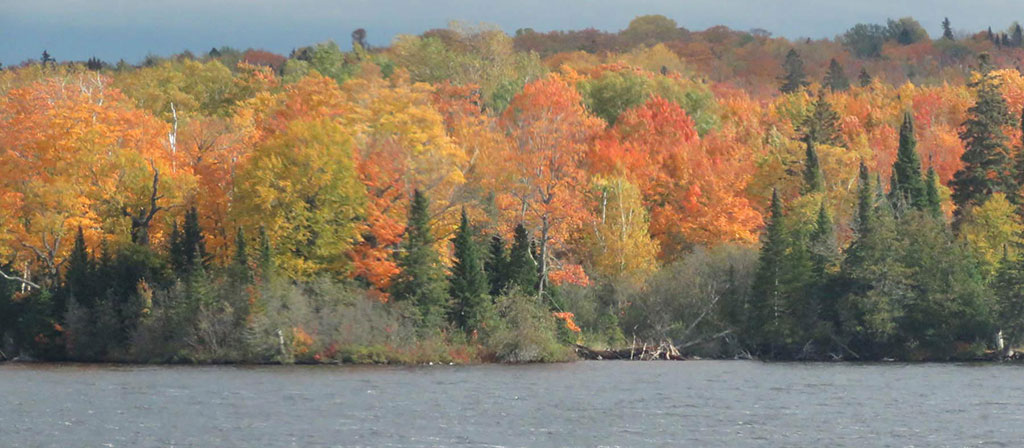
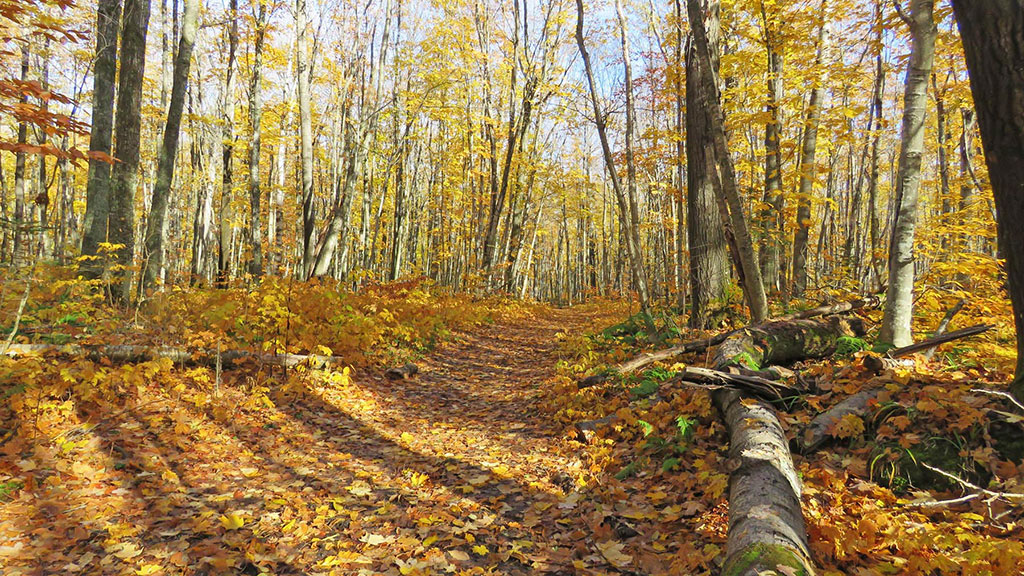
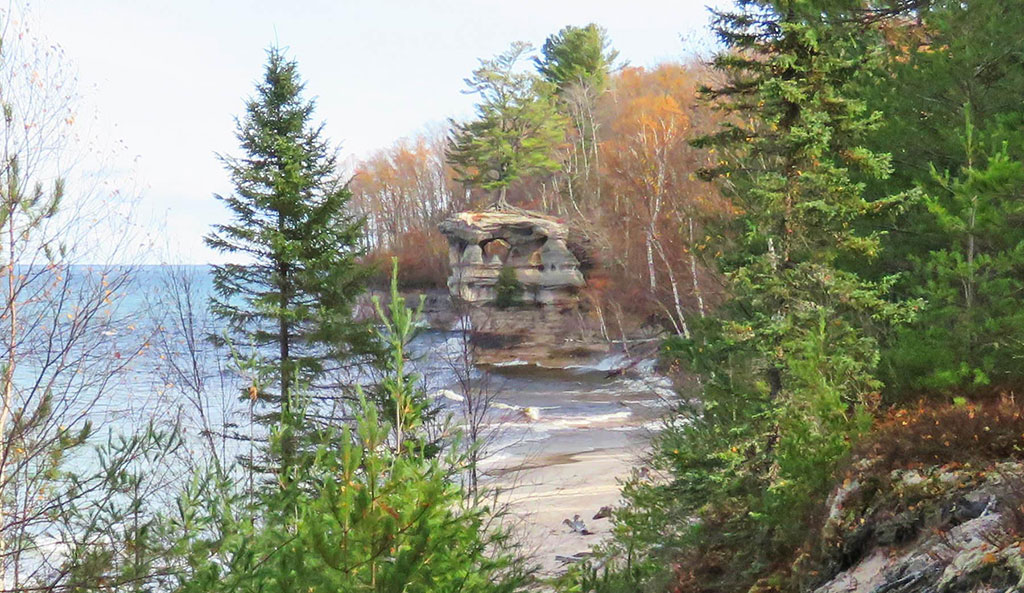
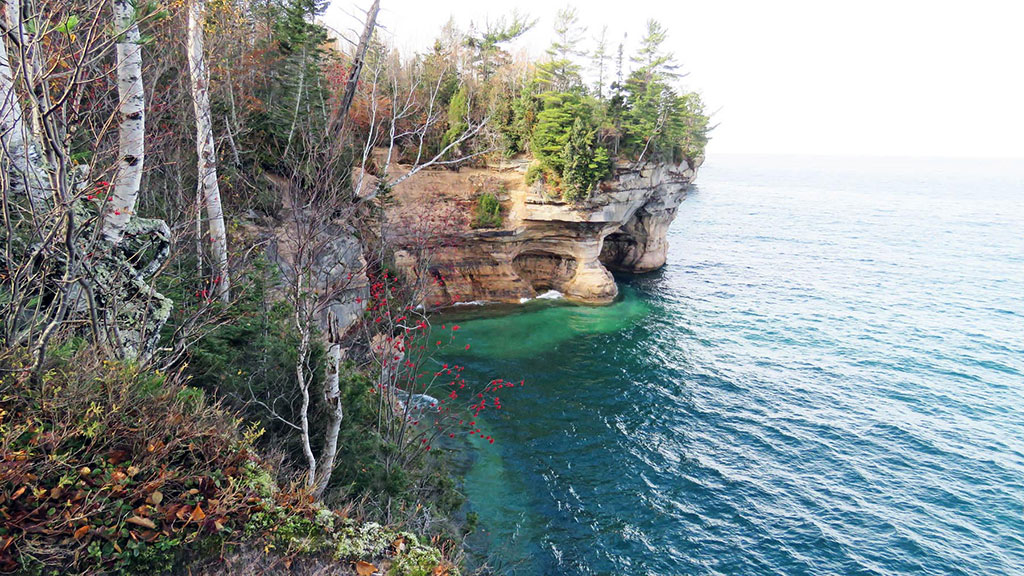
Fall started out busy with the rock show. Then I had to just finish out the museum hours at the end of September. Once the Mason show was done in October, I took a few deep breaths and regrouped. I finally was able to take the time to go on an epic Chapel Loop hike at the end of October. Several of these pictures are included here. The fall colors this year were delayed and spread out. It seemed like we had some reds early. The forests continued to explode with color through most of October.

Mineral of the Month – Lapis lazuli December 2018

Lapis lazuli, or lapis for short, is a metamorphic rock with an incredible, deep blue color.  Because of its intense color, this rock is collected as a semi-precious stone.  In fact, it has been collected since around 7,000 B.C.!  The largest and most prolific Lapis mines are located in Afghanistan, but the rock is also found in Russia, Chile, Italy, Mongolia, Canada and the U.S. 

In addition to Lapis being used in jewelry, at the end of the Middle Ages the stone was exported to Europe, where it was ground into a fine powder and used to make a paint pigment called ultramarine. Ultramarine was the finest and most expensive blue used by Renaissance painters. It was often used for the robes of the Virgin Mary, and symbolized holiness and humility. It remained an extremely expensive pigment until a synthetic ultramarine was invented in 1826.

Since lapis is a rock, it contains many different minerals.  From specimen to specimen, the exact composition, of course, varies.  The most important mineral component is lazurite (25% to 40%).  This rock can also contain calcite, sodalite, pyrite, augite, diopside, mica, hornblende, and more.  

Lapis is often used in lapidary since it takes an excellent polish.  It is made into jewelry, carvings, boxes, mosaics, ornaments, small statues, and vases.

According to metaphysical experts, Lapis stones can help us to go deep within ourselves to discover our true purpose and destiny.  It can also help enhance self-expression and awareness.  Lapis is a universal symbol of wisdom and truth.  

CITES

https://en.wikipedia.org/wiki/Lapis_lazuli

Hannes Grobe, https://commons.wikimedia.org/wiki/File:Lapis-lazuli_hg.jpg

https://en.wikipedia.org/wiki/Ultramarine

Arpingstone, https://commons.wikimedia.org/wiki/File:Lapis.elephant.800pix.060203.jpg

fr:User:Luna04, https://commons.wikimedia.org/wiki/File:Lapis_lazuli_block.jpg

Dezidor, https://commons.wikimedia.org/wiki/File:Ermitáž_(28).jpg

History Gem – Sand Dunes: A Fragile Ecosystem

As I looked through the Gitche Gumee Museum’s archives, I came across an article about sand dunes, titled” Dunes: As fragile as the shifting sands, we all need to protect this unique resource.”  It was published Michigan Natural Resources magazine in May/June 1979.  As much as I love the Lake Superior beach, I must admit my favorite place in Grand Marais is the Grand Sable Dunes.

Grand Sable Dunes is approximately five square miles of rugged terrain.  The dunes intersect the Lake Superior shoreline with the Grand Sable Banks.  These banks are 300 feet above the lake, but there are sections in the dunes that are more than 400 feet higher than the bluff of the banks.

These dunes formed after the glaciers retreated around 10,000 years ago.  One of the post-glacial lakes prior to the current Lake Superior was Lake Nipissing.  The water level of Lake Nipissing rose, which caused the Grand Sable Banks to become unstable and erode. A dominant northwesterly wind blew and carried the sand from the bluff to pile up in the flat upland south of the Grand Sable Banks. This sand was “perched” on top of the upland, hence the name, “perched dune system.”

Information from the Michigan Natural Resources magazine is below.

“Dunes have wide appeal.  as direct evidence of the Ice age, dunes are of considerable interest to geologists.  Botanists and biologists also are fascinated by the surprising diversity and distribution of plant and animal species found in the dunes, and by the unique adaptations these life forms make to high temperatures and low moisture conditions.”

“With all these values inherent in our dunes, it’s obviously important that we take steps to preserve them.  The climatic and geologic conditions that created them no longer exist, so if the dunes are destroyed, they are not likely to ever regain their present size and extent.”

It is because of the fragile nature of the dunes that the Pictured Rocks National Lakeshore does not allow any type of motorized vehicle in the area.  Most people respect this rule and do not drive their snowmobiles or four-wheelers up into the dunes.  If you should get caught, there are steep fines and the possibility of having your machine confiscated.  The amount of damage caused by violators is beyond what they can imagine.  The photo below shows a broken tree caused by a snowmobile.  There were more broken trees than we could count

So if you are in the Grand Marais area and decide to trek up into the dunes, please be respectful of this beautiful and fragile ecosystem.

CITES

https://www.researchgate.net/figure/Location-of-12-small-mammal-trapping-grids-located-within-a-10-ha-area-square-outline_fig1_269480385

https://www.nps.gov/piro/planyourvisit/scenicsites.htm

Current Grand Marais Scenes December 2018

For lots of different reasons, this year I did not go out on as many adventures as was true in past years.  However, there is no problem in selecting several photographs I’ve taken since the last web page update.

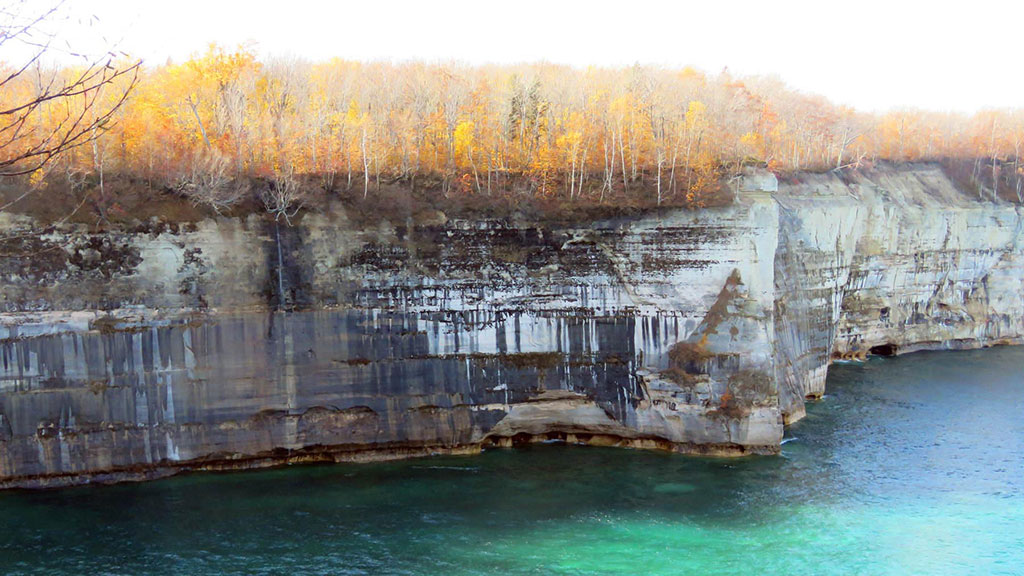
Our fall in Grand Marais had bizarre weather.  In September, we had several days with temperatures in the 80s.  The fall color process had already begun but was slowed down a bit by the warm weather.  As a result, the color season lasted longer than normal.  Here are a few pictures I took on adventures in the Pictured Rocks National Lakeshore.

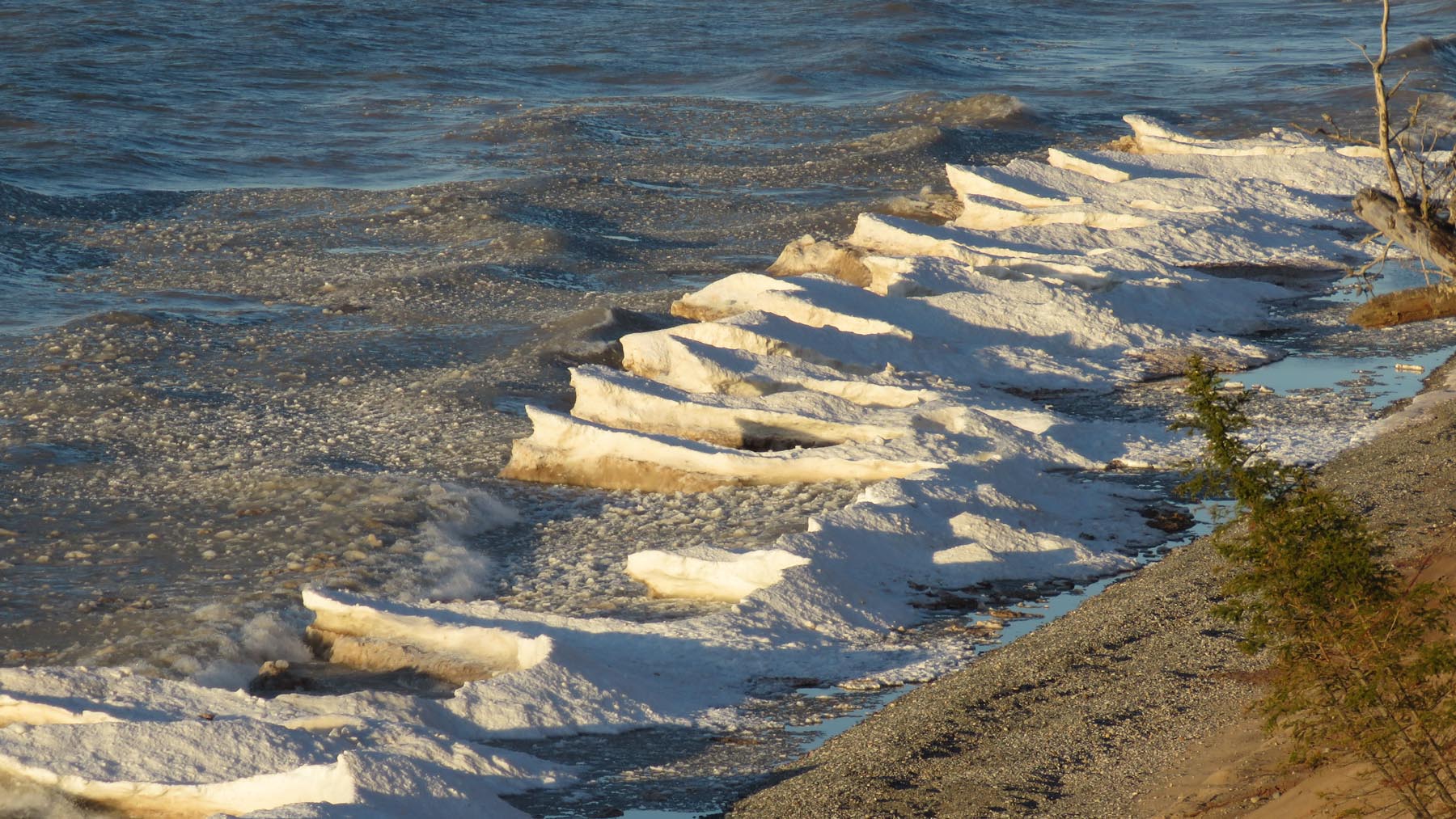
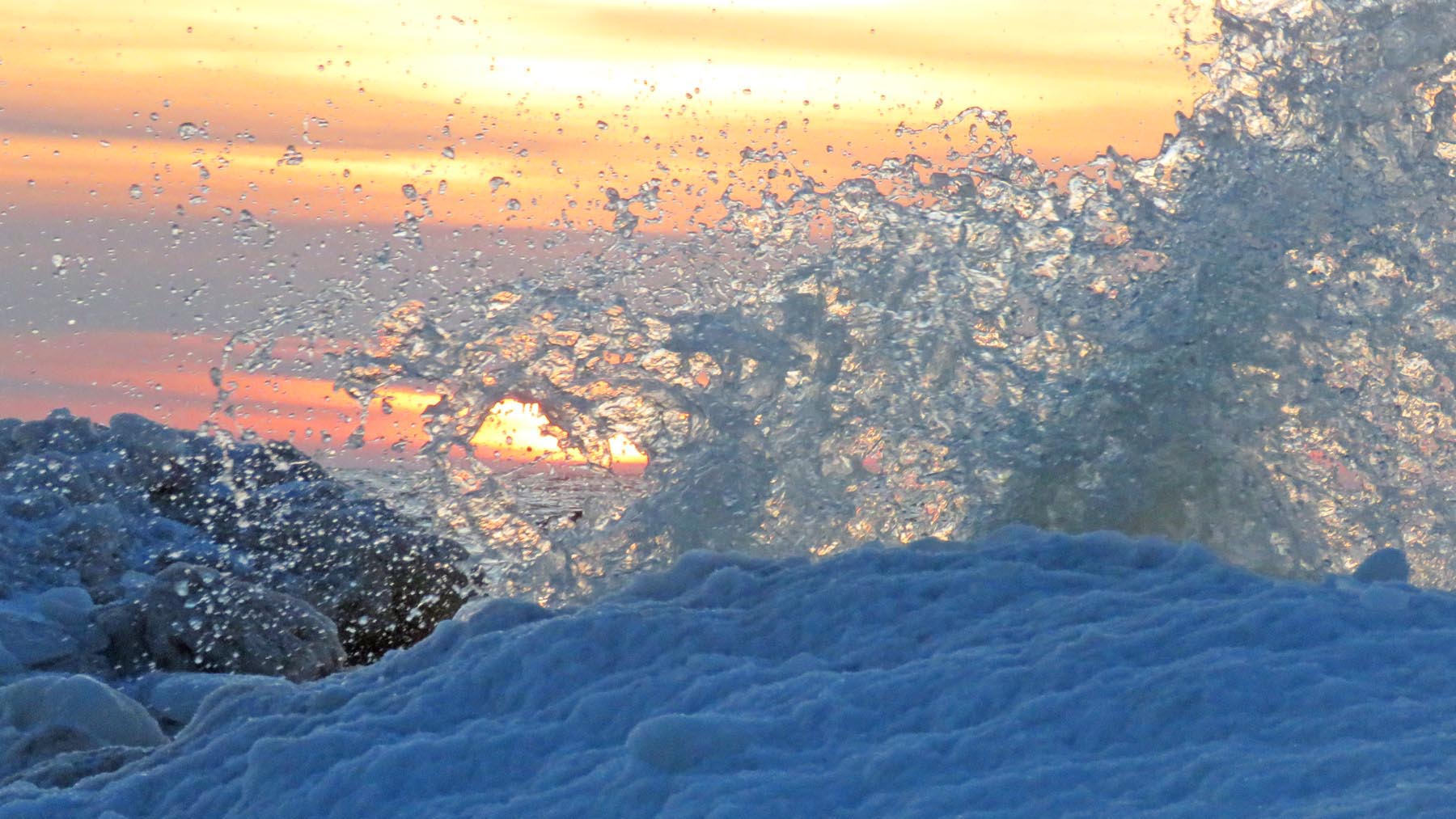
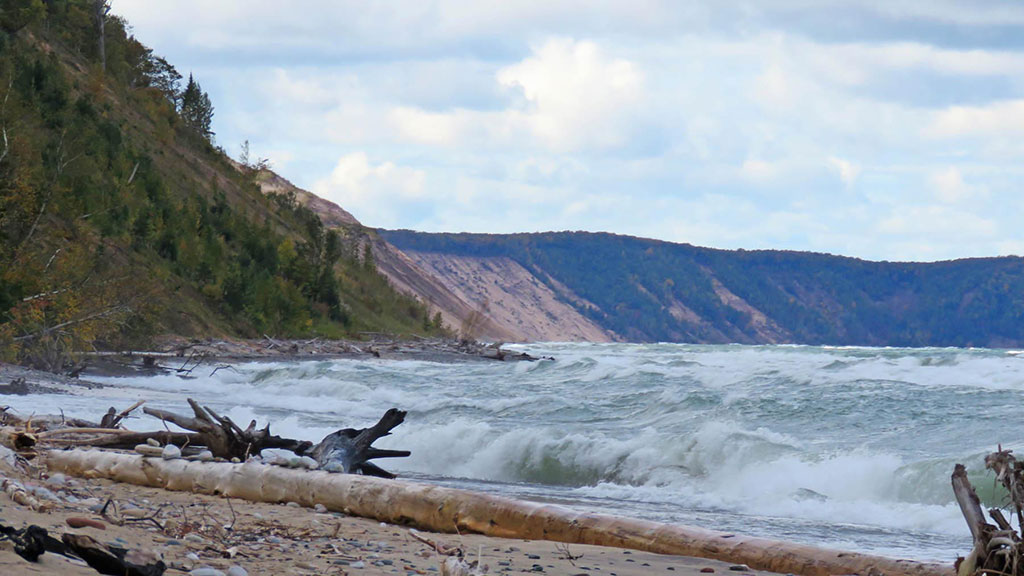
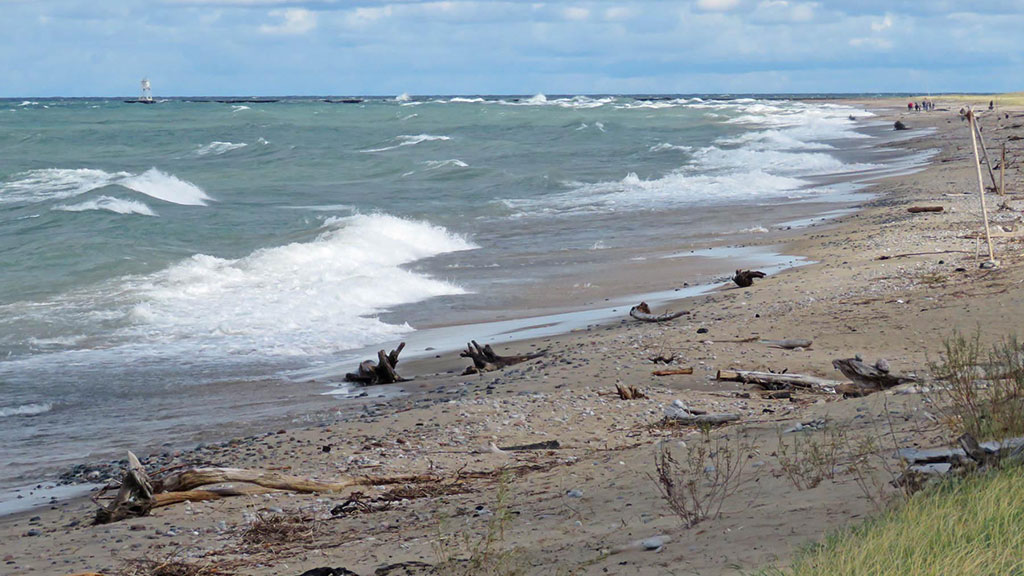
Just has been true for the past several years, the number of high-wind events seems a lot higher than it used to be.  Here are a couple photos of big waves caused by a huge storm we had early fall.

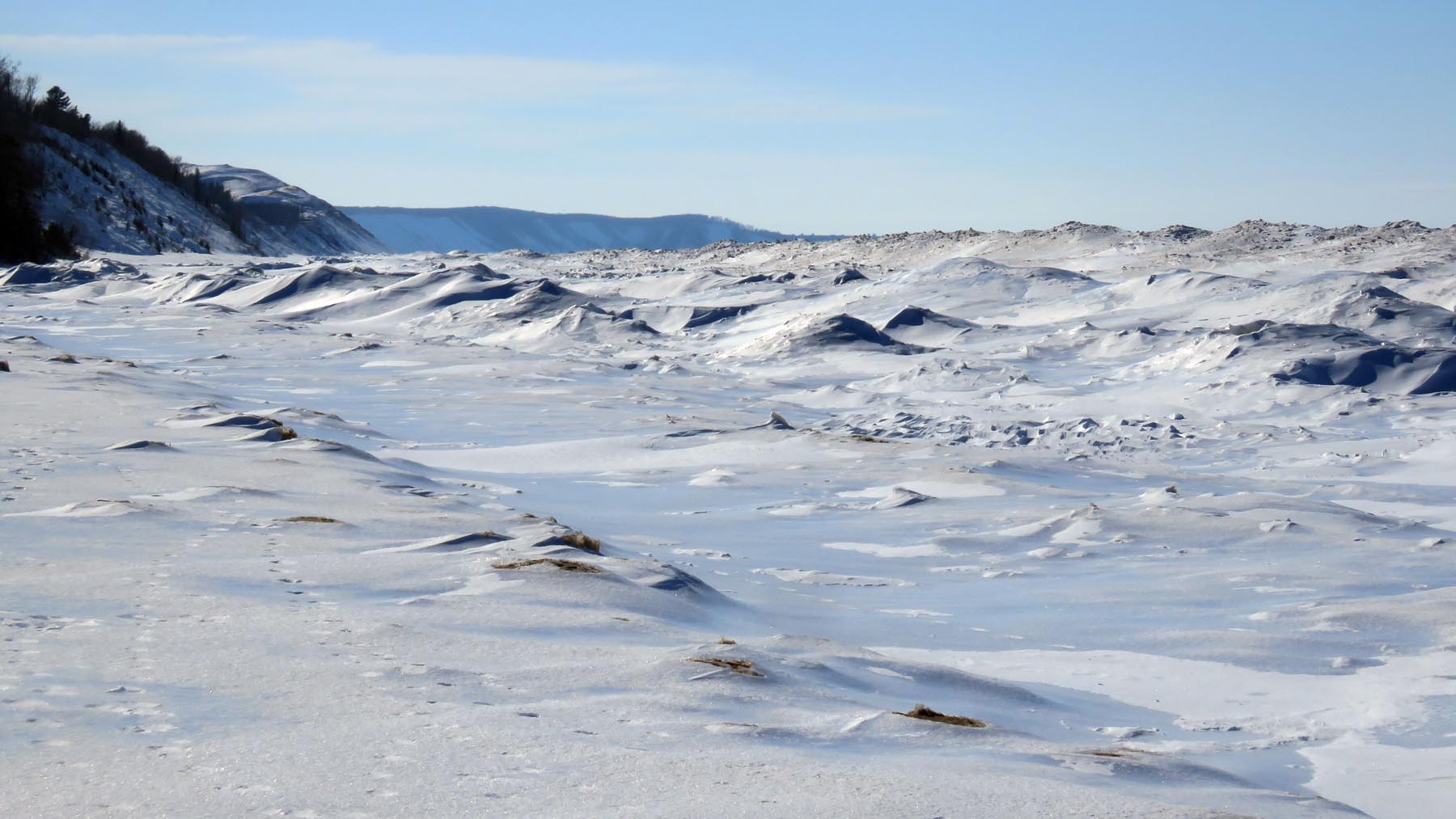
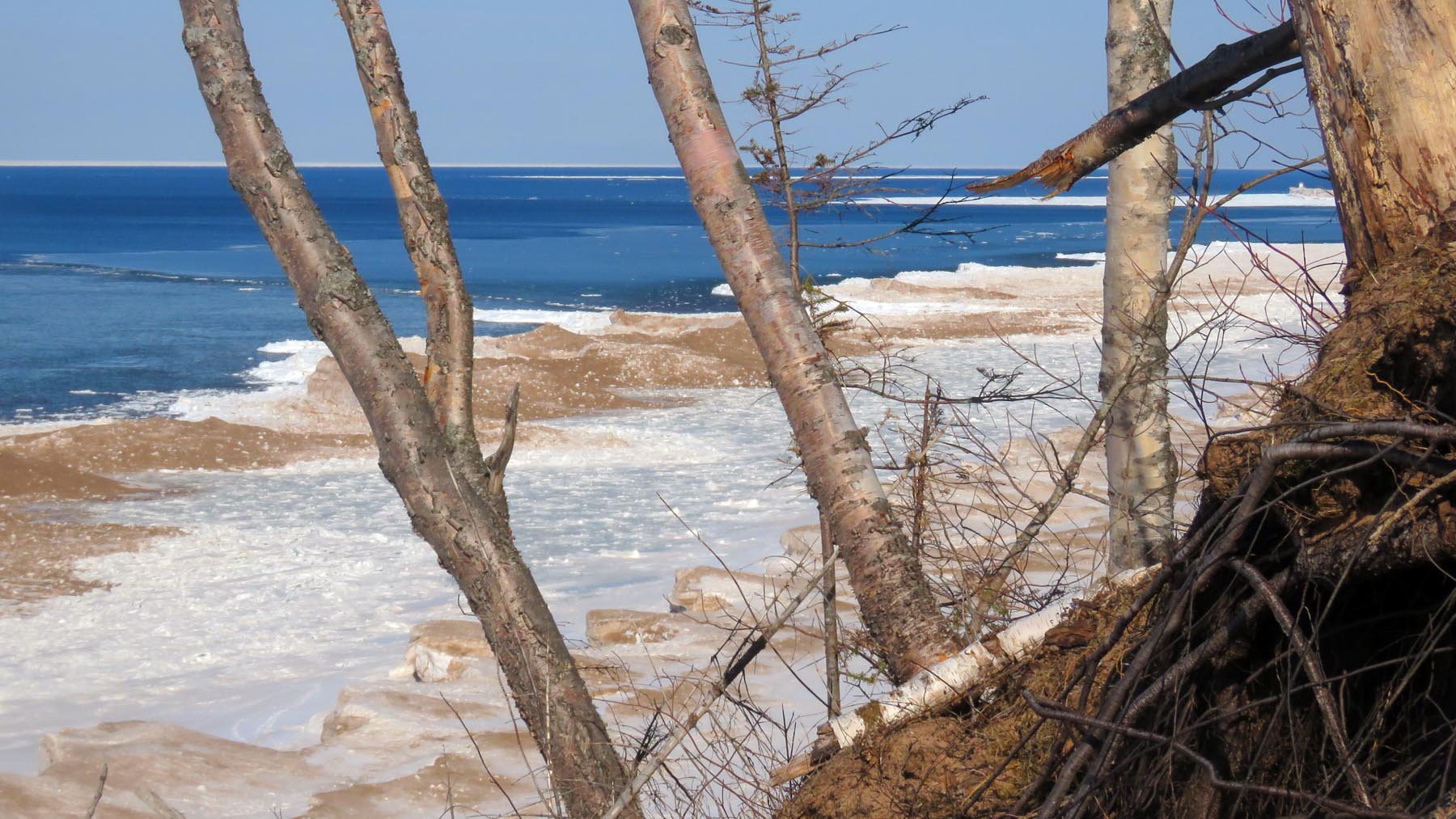
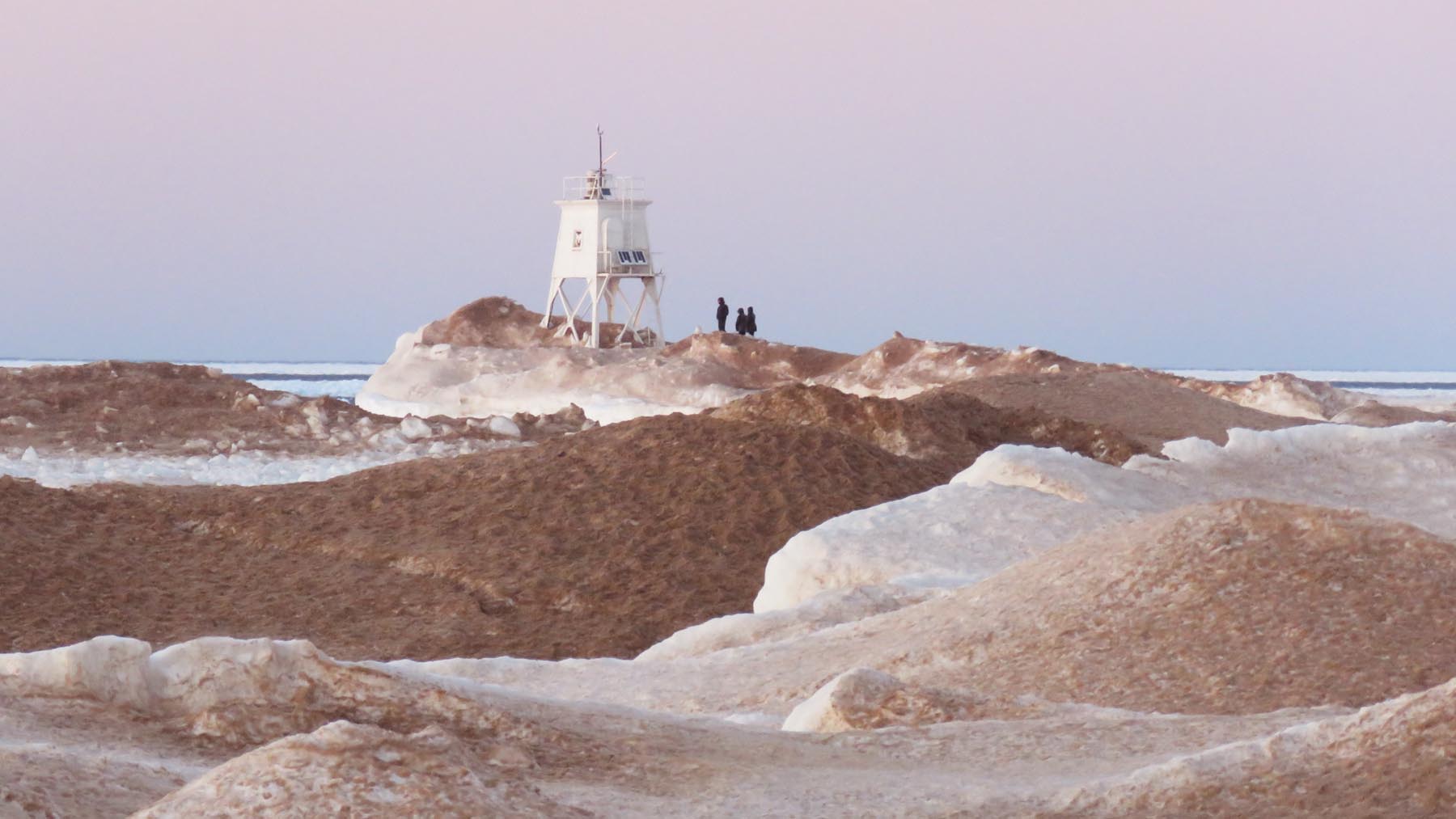
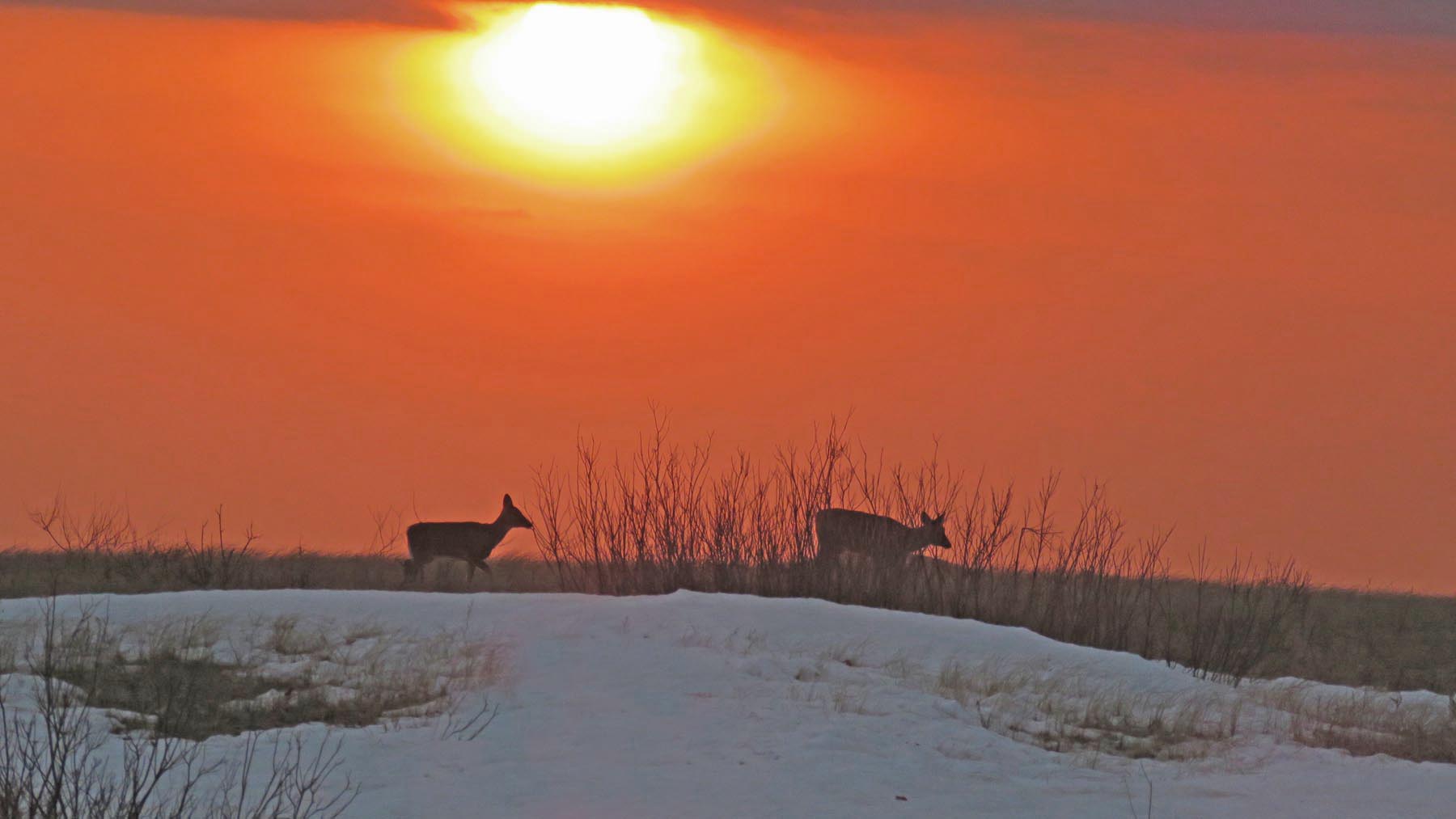
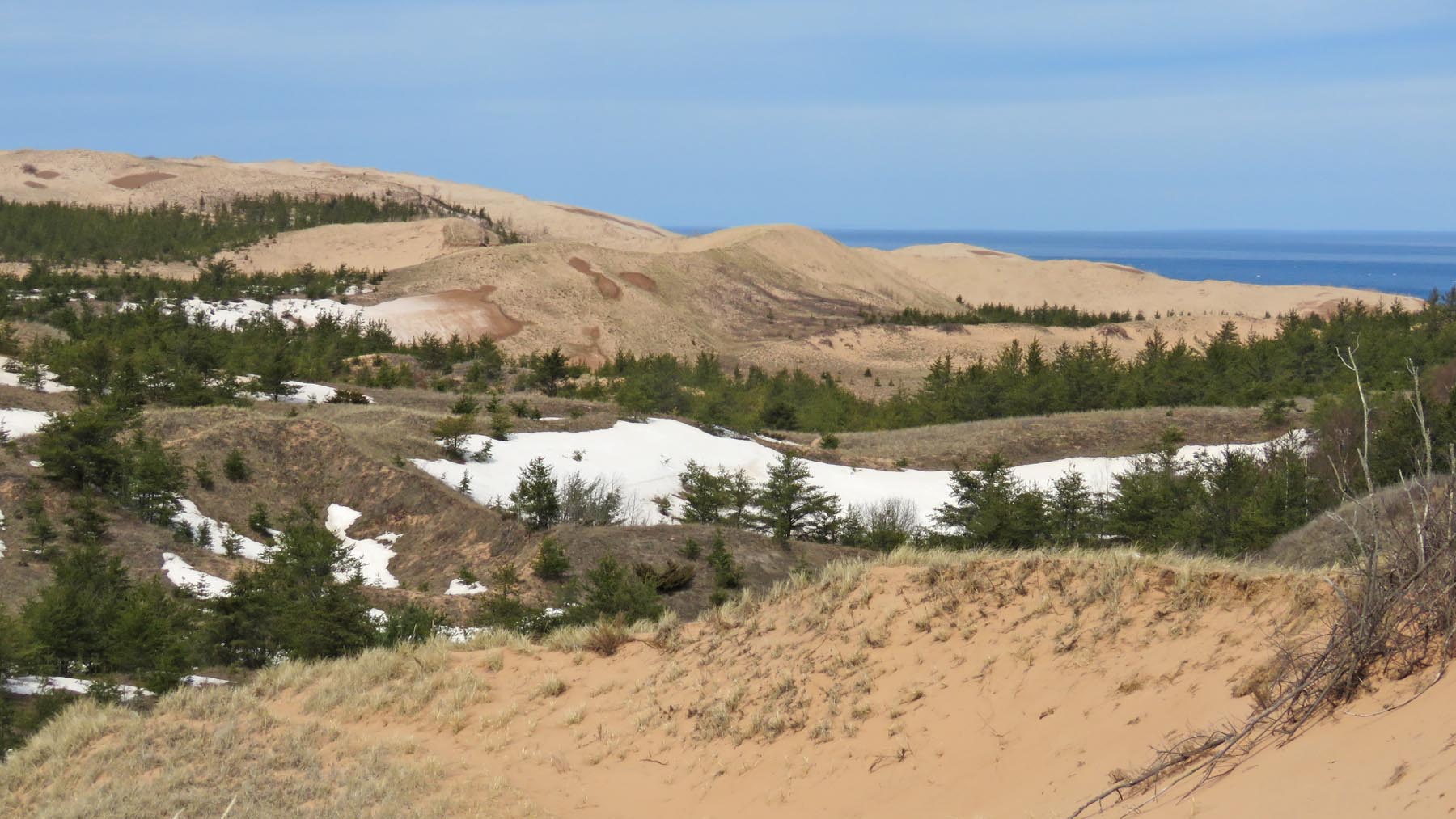
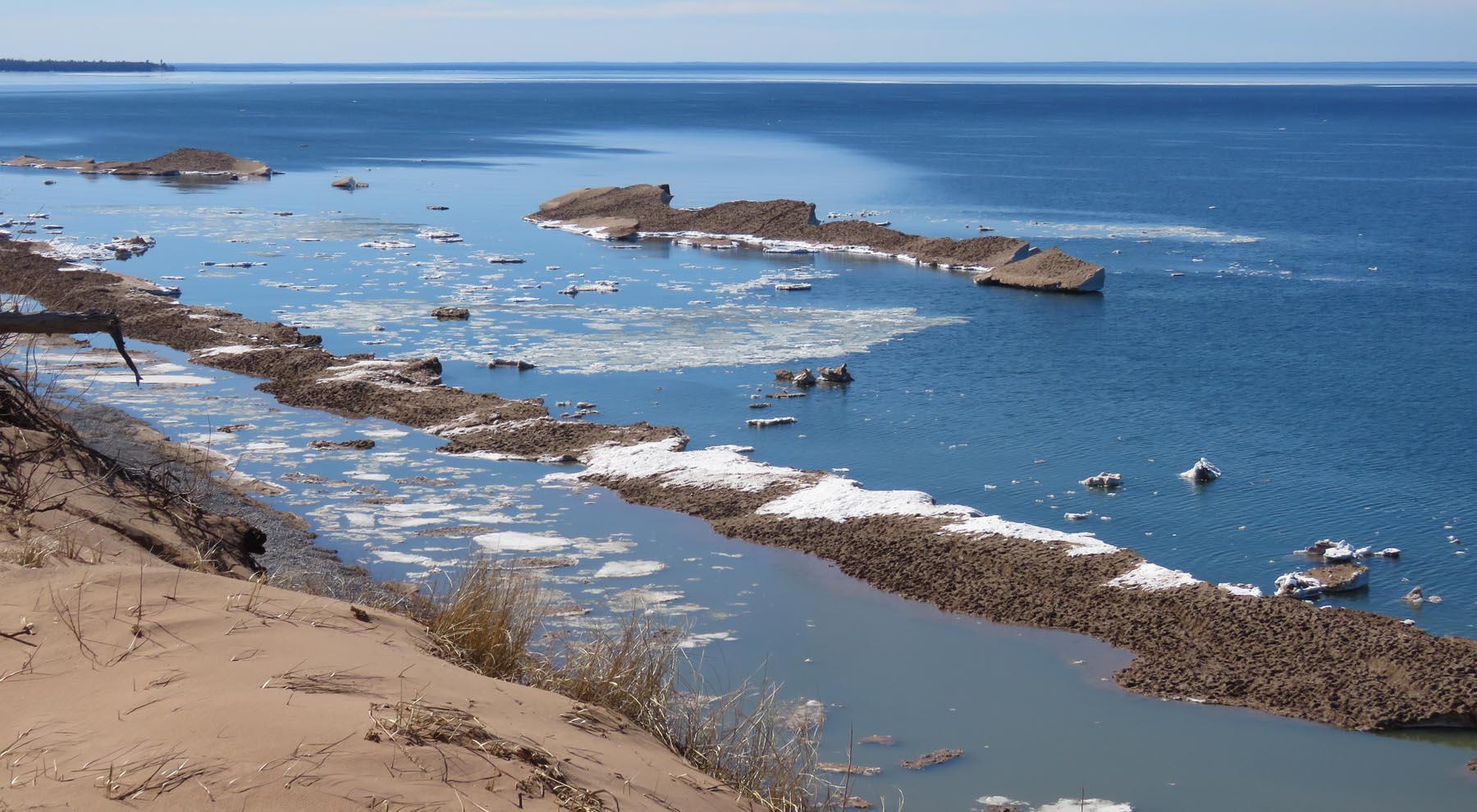
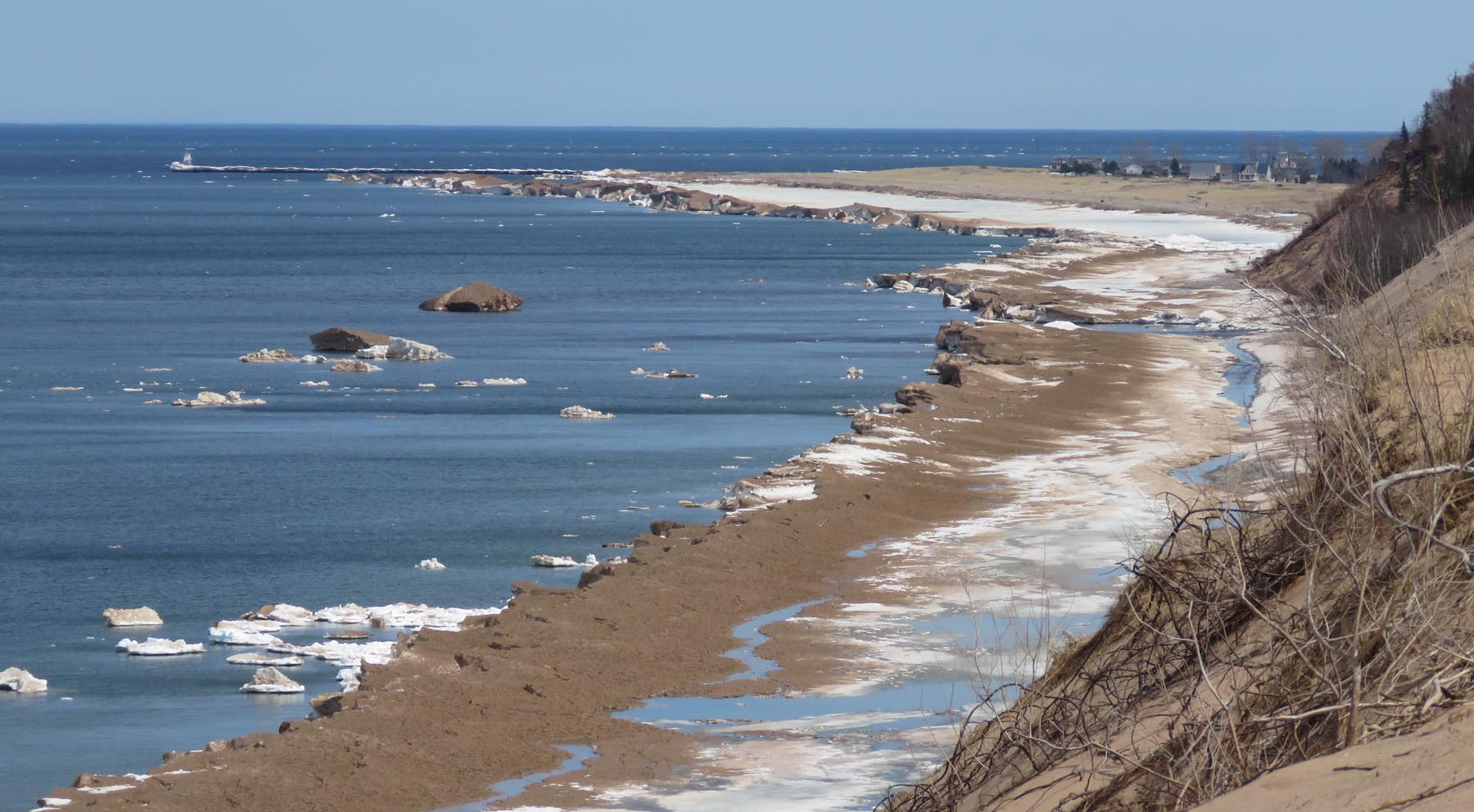
Although winter is a bit slow to start, we have had at least a couple of storms with six inches or more.  But then warm weather significantly decreased the snow pack.  Below are some early winter photos.  The first in Lonesome Point, located on the northeast side of Grand Marais Bay.  Many of the apples (again this year) never dropped from the trees.  I love the way they catch snow.  The last two photos were taken at Sable Lake.  The first picture I took from the Overlook.  It shows an evergreen leaning over the first coating of ice.  The second shows my beloved sand dunes.